That Yarn · Journal
Does Linen Yarn Get Softer with Washing?
Yes — and unlike almost any other fiber, it keeps softening for years. The reason is a single natural compound in flax, and understanding it changes how you'll think about linen forever.

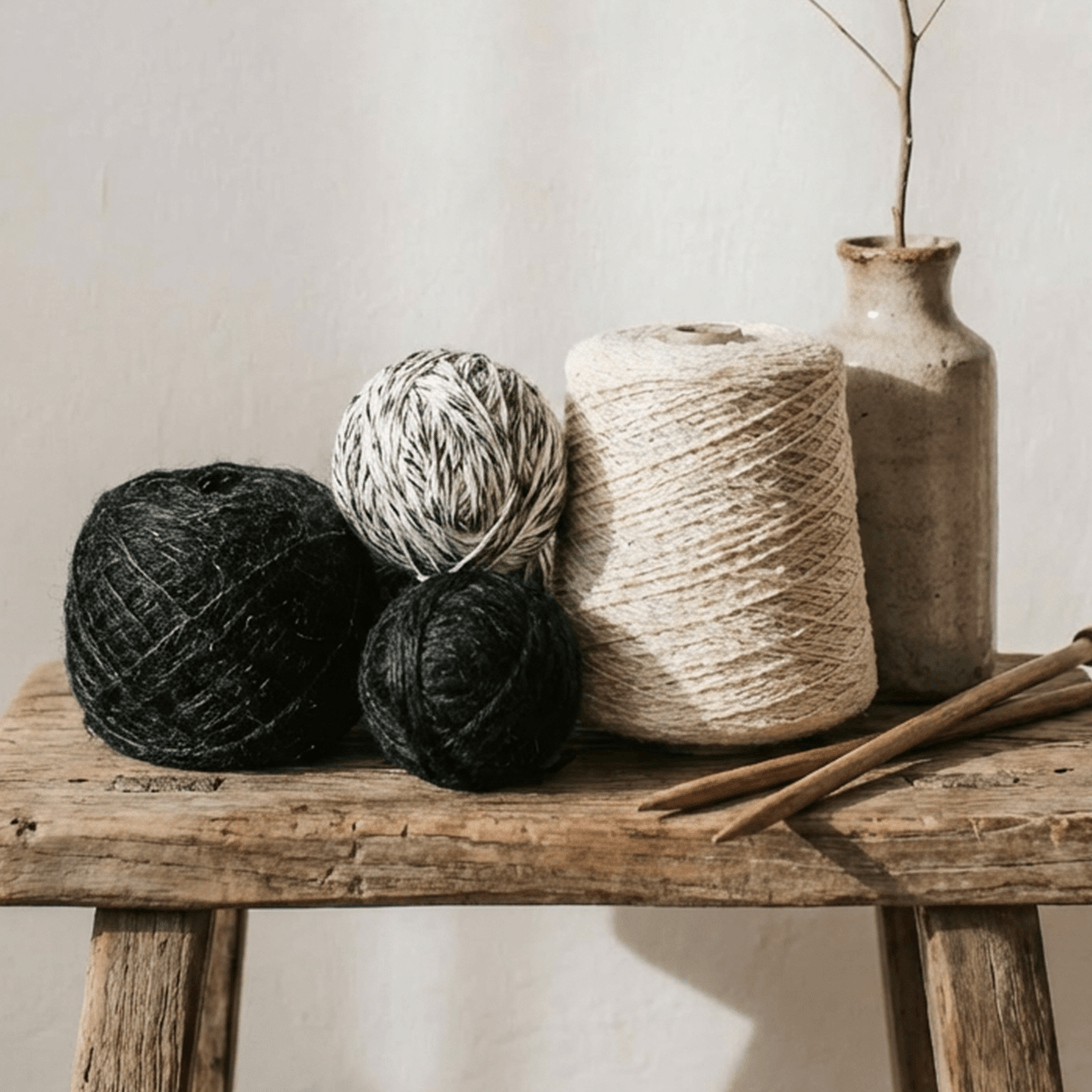
Pick up a cone of linen and your first impression may be doubt. It feels dry, firm, a little crisp — nothing like the plush softness of wool or the silk of cashmere. Many makers set it down again, unconvinced. That is a mistake, because linen is the one fiber that tells you almost nothing about itself on the cone.
Linen does get softer — beautifully, reliably, and more slowly than any other yarn you will use. But the way it softens is unusual, and it is worth understanding precisely, because it is unlike the way wool or cotton behaves, and it is the very thing that makes linen extraordinary.
What linen yarn is
Linen is spun from the long bast fibers inside the stem of the flax plant — one of the oldest textile fibers known, and one of the strongest. Its character is the opposite of a fluffy animal fiber: where wool is elastic and lofty, linen is strong, cool, and structured. It does not have crimp or spring. Its beauty is in strength, breathability, a dry natural texture, and a drape that improves with every passing year.
That firmness you feel on a new cone is completely normal. It is not a low grade or a fault. It is the sound of a fiber that has not yet been softened — and, crucially, has not been softened by chemicals to fake a plush hand it was never meant to have.
Why new linen feels firm: pectin
The single most important thing to understand about linen is a natural compound called pectin — and almost every casual explanation of it gets this wrong.
Pectin is not a surface residue or a coating that rinses off. It is a natural binding agent within the flax fiber — the same substance that sets jam — and its job is structural: it holds the bundles of cellulose fibers tightly together. This is exactly why linen is so strong and durable. It is also why new linen feels crisp: what you are feeling against your skin is the pectin doing its job, not a flaw in the yarn.
The firmness of new linen is pectin — a structural binder inside the fiber, not dirt or finish on its surface. It is the very thing that makes linen strong, and the very thing that will slowly give way to softness.
Why linen keeps softening for years
Here is the part that makes linen unique, and the part the usual explanation misses entirely. Pectin has one crucial property: it is water-soluble.
Every time linen is washed, water dissolves a little more of the pectin binding the fibers. As it dissolves, the cellulose fibers are freed from their rigid bundles — they begin to separate, slide against one another, and relax. That increasing freedom of movement is what your hand reads as softness. Wear adds to it, as the flexing of the fabric gently breaks down more of the binder.
Because there is a great deal of pectin to dissolve, this is not a one-time event. It is progressive. Most makers feel a clear change within the first several washes, and much of the transformation happens over roughly the first eight to fifteen. But it does not stop there — linen continues to soften gradually for years, which is why a linen piece owned for a decade feels entirely different from the same linen new. And it does all this without losing strength: the fiber sheds its binder and grows softer and more lustrous, rather than wearing out.
Each wash — water dissolves a little more pectin → fibers loosen, soften
Over years — softening continues, strength remains → supple, fluid, lived-in
Linen's softness is a different kind — and a different fate
This is where linen fits into a bigger truth we return to often: not all "crunchy" yarns soften in the same way, and linen's path is its own. It helps to see the three fates side by side.
| Fiber | How it softens | The result |
|---|---|---|
| Wool & animal fibers | Bloom — mostly at the first wash | Fluffy, lofty, a soft halo |
| Linen | Progressive — a little more for years | A cool, dry, fluid softness |
| Ramie & washi | Softens, but keeps a crisp character by design | Deliberately crisp and structured |
Wool blooms once, in water, and is then largely done. Linen never quite finishes — it keeps getting better. And its endpoint is not the fluffy softness of wool at all: linen becomes cool, smooth, and fluid, a dry softness with beautiful drape, not a plush halo. It is a different destination, reached by a different road. We follow this wider story in our note on why some yarns feel crunchy, and place linen among the fiber families in our guide to modern yarn fibers.
Linen doesn't try to become wool. Its softness is cool and dry, with drape rather than fluff — and it is the only fiber that keeps softening, quietly, for as long as you own it.
The honest softness — and why it matters
There is a deeper point here, and it sits close to everything we believe about yarn. Linen's softness is structural — built into the fiber and revealed over time — not a finish applied to the surface.
Cheaper fabrics often feel soft immediately because they have been coated with chemical softeners. Those wash out, and the fabric is left feeling worse than it began. Linen makes the opposite bargain: it asks for a little patience, and rewards it with a softness that deepens for years instead of fading. A firm linen cone is being honest with you. It is showing you the real fiber, and keeping its softness in reserve for the wash and the wearing.
Is linen good for summer knitting?
It is one of the finest fibers there is for warm weather, and for the same reasons that make it worth the patience. Linen is highly breathable, absorbs moisture and releases it quickly, is cool against the skin, and is exceptionally durable. It suits summer tops, lightweight cardigans, openwork pullovers, market bags, home textiles, and woven scarves and wraps — anything that benefits from coolness, structure, and drape.
Its crispness is an asset here, not a drawback: it gives openwork and lace beautiful stitch definition, and lends structure to garments meant to hang cleanly rather than cling.
Working with linen cone yarn
A few practical notes, especially for industrial and mill-end linen cones.
- Expect low elasticity. Linen has little stretch, so stitches feel less forgiving than wool as you work. A relaxed, even tension helps, and the fabric settles beautifully once washed.
- Always swatch and wash. Linen changes markedly in the wash — in drape, gauge, and hand — so a washed swatch is the only honest guide, especially with cone or mill-end yarn from industrial production. See our guide to cone yarn.
- Wash gently, then let it live. Cool or lukewarm water and a mild detergent; press out water and dry flat. Skip fabric softeners entirely — they coat the fiber and undo the very breathability you chose linen for. The best softener is simply time.
- Let it improve. Don't judge a linen piece by its first wash. It is only at the beginning of a years-long softening when you first wear it.
Linen, origins, and mill-end cones
Fine flax is grown and spun across many traditions — the linen mills of Italy and across Europe are famous, but excellent linen is spun in China and elsewhere too, and the flax's origin subtly shapes how a given linen will soften. As with any fiber, the country is a starting point, not a verdict; the quality of the flax and the spinning matter more than the flag.
This makes linen a particularly rewarding fiber to find as mill-end. A linen cone can look plain and feel firm on arrival, then become quietly expressive after washing and making — its real character living in the finished cloth, not on the cone. That gap between first impression and finished fabric is exactly where the value of surplus linen hides. We make that case in full in our guide to buying surplus and mill-end yarn.
So — does linen get softer?
Yes: beautifully, structurally, and for years. New linen is firm because pectin binds its fibers tight — the same pectin that makes it so strong. Every wash dissolves a little more, freeing the fibers to relax, and the softening continues gradually for as long as you own the piece. Linen never becomes fluffy like wool; it becomes cool, dry, fluid, and quietly refined — softer, and more itself, with every wash and every wear.
It asks for patience, and it is one of the few materials that truly repays it.

Frequently asked questions
Does linen yarn get softer with washing?
Yes, and more than almost any other fiber. New linen is firm because of pectin, a natural compound that binds its fibers together. Pectin is water-soluble, so every wash dissolves a little more, letting the fibers relax and soften. Most makers notice a clear change within the first several washes, and linen keeps softening gradually for years.
Why is new linen yarn stiff or crisp?
Because of pectin — a natural binding agent inside the flax fiber that holds the cellulose bundles tightly together. It is what makes linen so strong and durable, and what you feel against your skin when linen is new. It is not a residue on the surface or a fault; it is the fiber's own structure, and it dissolves gradually with washing.
How many washes until linen becomes soft?
Most linen feels noticeably softer within the first several washes, with much of the change happening over roughly the first eight to fifteen. But linen doesn't stop there — it continues to soften gradually for years, which is why decade-old linen feels entirely different from new. There is no single finishing point; it keeps improving.
How is linen's softness different from wool's?
Wool blooms soft mostly at its first wash and becomes fluffy and lofty. Linen softens progressively over years and becomes cool, smooth, and fluid rather than plush — a dry softness with beautiful drape, not a fuzzy halo. They reach different kinds of softness by entirely different routes.
Should I use fabric softener on linen?
No. Fabric softeners coat the fiber and reduce the breathability and moisture-wicking that make linen worth choosing, and linen doesn't need them. Its softness develops naturally through washing and wear as the pectin dissolves. Cool water, a mild detergent, and time are all it takes.
Is linen yarn good for summer knitting?
Yes — it's one of the best. Linen is highly breathable, absorbs and releases moisture quickly, is cool to the touch, and is very durable. Its crispness gives openwork and lace crisp stitch definition and lends structure to garments meant to hang cleanly, making it ideal for summer tops, lightweight cardigans, and woven pieces.
Some yarns don't come back.
That Yarn drops new mill-end on the 1st and 15th.
Have a question about a specific cone? Write to us at hello@thatyarn.com — we answer every email.