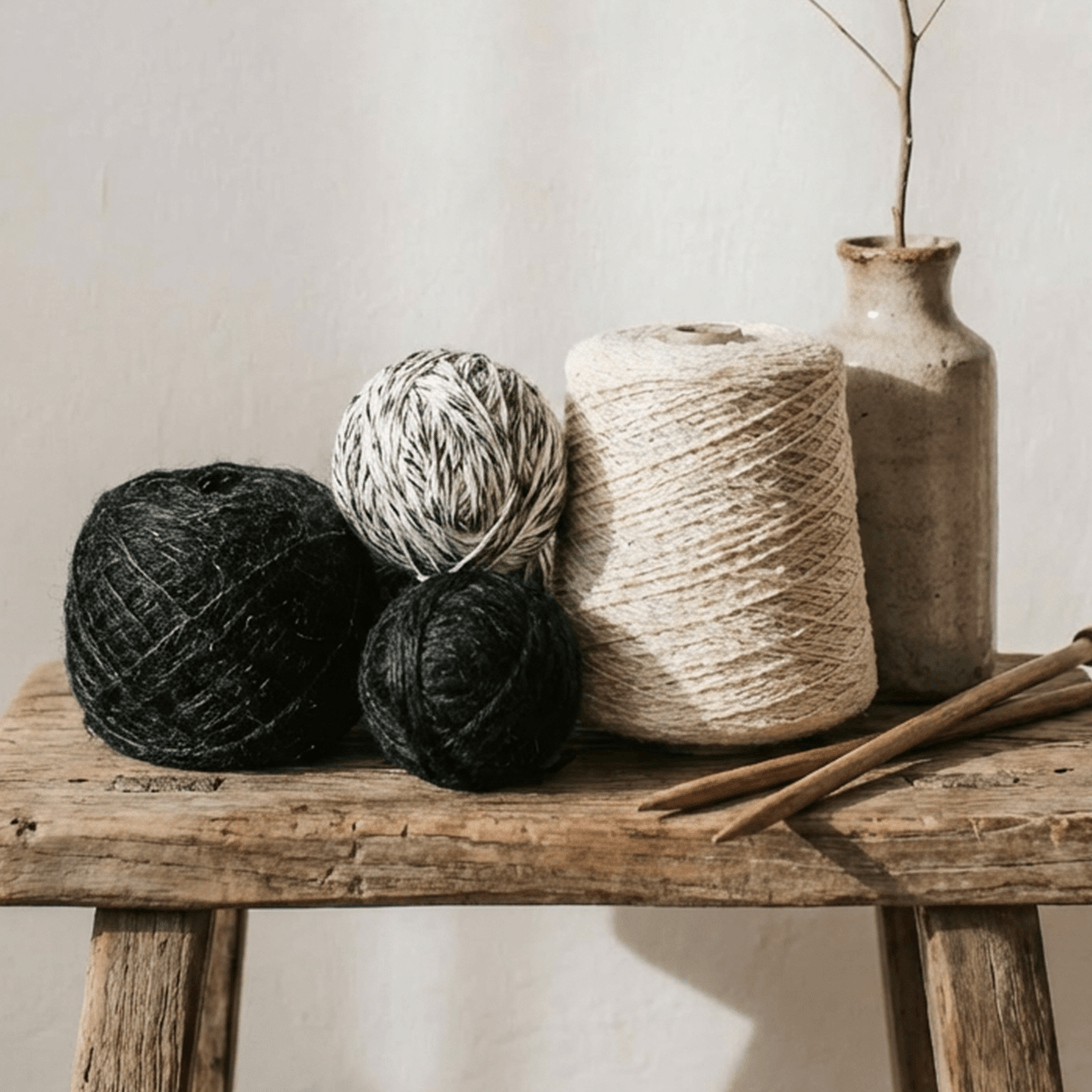
That Yarn · Journal
Why Buy Surplus & Mill-End Yarn?
Because the same fiber the luxury houses use is left behind at the end of a production run — the label and the markup removed, the quality intact.
Surplus yarn carries an unfortunate word. "Surplus" sounds like leftovers, seconds, the bin at the back of the shop. The reality is close to the opposite: much of it is the finest fiber in the world, made for luxury production, and available to individual makers only because a factory made slightly more than it needed.
Understanding where it comes from is the whole argument for buying it. So let's start there.
What surplus and mill-end yarn actually are
The two words describe the same thing from slightly different angles.
Surplus yarn is yarn that a mill produced but did not use — from a cancelled order, an overrun, or a production estimate that ran generous. Mill-end yarn is the tail of a run: the last few cones of a colour batch, the remainder after a factory's order is filled.
Both exist for the same structural reason. Industrial mills produce in large batches and to a margin of safety, so that a garment run never falls short of yarn. The yarn left over when the run is complete is not defective and not second-rate. It is simply extra — the same yarn, minus a buyer.
Surplus is not what was rejected. It is what was left over. The distinction is everything.
Why the quality is genuinely high
This is the point that surprises people, so it is worth being precise about it rather than merely asserting it.
A great deal of surplus and mill-end yarn originates in high-end knitwear production — the mills that spin for luxury fashion houses. When those mills over-produce, the extra cones carry the identical fiber that went into the garments on a boutique shelf. The finest cashmere is grown in Inner Mongolia and spun by the world's largest cashmere spinners; superb worsted and cashmere blends come out of Biella; specialty fibers from Japan. Surplus from these supply chains is that fiber, at an earlier stage. We trace where it comes from in our looks at Chinese-spun yarns and Italian spinning.
The only real difference between a surplus cone and the luxury retail skein is what happened after the fiber was spun: the retail yarn was washed, finished, branded, packaged, and priced accordingly. The surplus cone skipped those steps. You are buying the fiber before the markup was added — not a lesser version of it.
| What you pay for in retail yarn | In a surplus cone |
|---|---|
| The fiber itself | Identical |
| Branding & packaging | Removed |
| Retail markup | Removed |
| Finishing (washing, softening) | Often left for you to do |
The real advantages, in full
Luxury fiber at a fraction of the cost
Because you are buying before the branding and markup, mill-quality fiber reaches you at a fraction of what the finished retail yarn would cost. This is the plainest reason to buy surplus: the same cashmere, merino, yak, or linen, for meaningfully less.
Colours and blends you cannot find elsewhere
Surplus lots include discontinued shades, one-off blends developed for a single collection, and small batches that were never sold at retail at all. For a maker who values a fabric no one else will have, this is not a compromise — it is the appeal. The scarcity is the originality.
Enough yarn for real projects
Cones hold large, continuous lengths — often enough for an entire sweater, blanket, or weaving warp from a single batch, with no dye-lot joins. Retail skeins, in small standardised amounts, force lot-matching on anything large. A cone simply gives you enough. Our comparison of cone versus ball yarn works through this.
A genuinely lower-impact choice
This is where surplus is quietly meaningful. Buying it consumes no new raw material and drives no new production — the fiber already exists. It puts to use yarn that would otherwise sit idle in a warehouse or, eventually, be discarded. It is circularity in the most literal sense: material already made, kept in use rather than wasted. No moral performance is required; the maths simply favours it.
What to expect — honestly
Surplus is not retail yarn, and pretending otherwise would help no one. Here is the trade you are making, stated plainly.
- It often arrives unfinished. Many cones carry spinning oil and have not been washed, so they feel firm on arrival and bloom softer once washed. This is not a flaw — it is the yarn in its raw state, waiting for you to finish it to your own standard.
- It may need preparing. A cone may want rewinding to release tension, and fine yarn may want holding in several strands. None of it is difficult.
- The lot is finite. When a surplus batch is gone, it is gone — there is no reorder. This is the honest cost of the originality, and the reason to buy enough at once.
- Minor cosmetic variation is possible. An occasional rewound cone or small imperfection comes with the territory, and should always be described plainly in the listing.
Some yarns don't come back. That is not a marketing line — it is the literal nature of surplus, and the reason a cone you love is worth acting on.
Who surplus yarn is — and isn't — for
Honesty cuts both ways, so it is worth saying plainly who this suits.
Surplus rewards the maker who values the material and is happy to meet it partway — to swatch, wash, and finish, and to treat a scarce cone as a find rather than a catalogue item to reorder. It suits garments, blankets, weaving, and anyone drawn to fibers and colours that retail will never carry.
It is less suited to a maker who needs to cast on this minute with no preparation, who is following a pattern written to exact retail skein amounts, or who wants the security of buying more of the same lot next month. For that, retail yarn is the honest answer — and there is no shame in wanting it.
How That Yarn approaches it
Not all surplus is worth curating, and the work is in the selection. Every cone offered here is chosen for fiber quality, texture, and creative potential — and just as importantly, described honestly, with clear condition notes, so you know exactly what is arriving before you buy.
The aim is a considered, gallery-like selection rather than a bargain bin: a small number of genuinely fine cones, each with its story of fiber and origin told plainly. Where the specification is incomplete — as surplus specifications sometimes are — that gap is noted rather than guessed at. The full curated selection lives on the website; a portion is also available through the eBay outlet.
Buying a surplus cone this way is less a transaction than a rescue: a beautiful fiber, made for luxury and left over by chance, kept in use and made into something by hand.
Frequently asked questions
What is the difference between surplus and mill-end yarn?
They describe the same thing from different angles. Surplus yarn is yarn a mill produced but didn't use — from cancelled orders or overproduction. Mill-end yarn is the tail of a run, the last cones of a colour batch. Both are simply extra yarn left after a production run, not defective or second-rate.
Is surplus yarn lower quality than retail yarn?
No. Much surplus comes from high-end knitwear production — the same mills that spin for luxury fashion — so the fiber is identical to what went into boutique garments. The difference is only that the surplus cone skipped the branding, packaging, and retail markup, not the quality.
Why is surplus yarn cheaper?
Because you buy the fiber before the branding and markup are added. A surplus cone carries the same cashmere, merino, yak, or linen as luxury retail yarn, without the retail packaging and pricing — so mill-quality fiber reaches you at a fraction of the finished cost.
Is buying surplus yarn sustainable?
Yes, in a literal sense. It consumes no new raw material and drives no new production, because the fiber already exists. It puts to use yarn that would otherwise sit idle or be discarded — keeping material already made in circulation rather than wasted.
What should I expect when buying surplus yarn?
Often it arrives unfinished, carrying spinning oil and unwashed, feeling firm until washed. A cone may need rewinding, and fine yarn may want holding in several strands. The lot is finite, with no reorder, and minor cosmetic variation is possible — which is why honest condition notes matter.
Why can't I reorder a surplus yarn I loved?
Because surplus is, by definition, finite — the remainder of a completed production run. When a batch sells out, that dye lot and run are gone for good. This is the trade-off for its originality, and the reason to buy enough for a whole project at once.
Is surplus yarn good for a first-time knitter?
It can be, with a little willingness to prepare it — rewinding, swatching, and washing before judging. If you prefer to cast on immediately with no preparation, or to follow a pattern written to exact retail amounts, standard retail yarn may suit you better to begin with.
Some yarns don't come back.
That Yarn drops new mill-end on the 1st and 15th.
Have a question about a specific cone? Write to us at hello@thatyarn.com — we answer every email.