That Yarn · Journal
What Is Cone Yarn? A Complete Guide for Makers
Not a shape, but a whole way of buying fiber: wound for machines, sold unfinished, and often far finer than anything on a retail shelf. Here is what that means, and how to work with it.
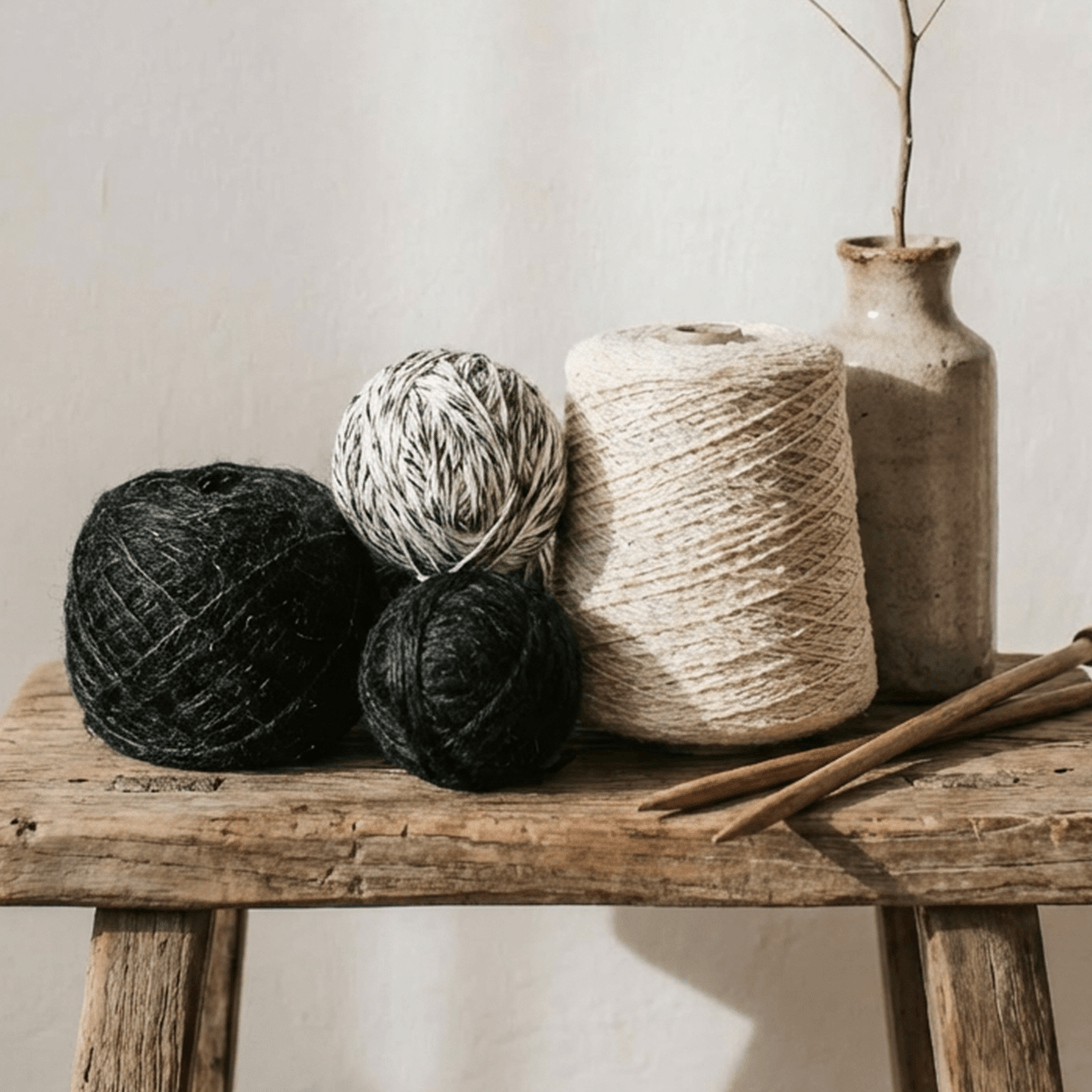
 Cone yarn is one of the most rewarding materials a knitter or weaver can discover, and one of the most misunderstood. It looks unfamiliar, it feels unfamiliar, and the numbers on its label follow a system most makers never encounter in a yarn shop.
None of that is a barrier once you understand what a cone actually is. This guide covers the full picture — what defines cone yarn, why it exists, how it differs from a skein, what you gain and what you take on, and how to work with your first cone — and points you to deeper reading on each part along the way.
The definition
It is tempting to define cone yarn by its shape: yarn wound onto a cone instead of a ball or skein. That is true, but it explains almost nothing. The shape is a consequence of three deeper facts, and those facts are the real definition.
| Cone yarn is defined by | Meaning |
|---|---|
| Format | A large, continuous length wound for uninterrupted machine feeding |
| Origin | Made for knitwear factories and weaving mills, not hand knitters |
| State | Sold unfinished — the softening step deliberately left undone |
Hold those three together and the shape follows naturally. A machine needs thousands of uninterrupted meters, so the yarn is wound in bulk. A factory buys it, so it is optimised for the machine rather than the hand. And because finishing is a decision the factory makes later, on the garment, the yarn ships in a raw, in-between state.
Cone yarn describes the format, origin, and state of a yarn — never its fiber. A cone can hold cashmere, linen, cotton, or wool. "Cone" is how it was made and sold, not what it is made of.
Why yarn comes on cones
A hand knitter joins a new ball every hundred metres or so and thinks nothing of it. A knitting machine cannot. It runs yarn at speed through metal guides and thousands of needles, and every join is a potential break, a potential fault, a stop in a production line that is measured in seconds.
So industrial yarn is wound in the largest continuous lengths practical. A single cone can hold an amount that surprises people used to 50-gram balls.
A 1,330g cone of fine 2/15Nm yarn holds roughly 10,000 meters — about 10,900 yards, on one cone.
That is the scale factories work at, and it is why cones exist. When a run ends and yarn remains — from over-ordering, a cancelled order, a colour change — it enters the surplus market exactly as it left the mill: on the cone, in bulk, unfinished. That surplus is how cone yarn reaches hand makers at all, and what a mill end really is. We cover that supply chain in understanding industrial yarn.
Cone yarn versus ball yarn
The difference is real, but it is not a difference of quality. It is a difference of finishing stage and intended buyer.
| Cone yarn | Ball / skein yarn | |
|---|---|---|
| Made for | Machines, at speed | Hand knitters |
| Finishing | Deferred to the garment | Already done |
| Surface | Often carries spinning oil | Washed, ready to use |
| Quantity | Large, continuous | Small, standardised |
| Label system | Nm count | Weight category |
| First impression | Firm, sometimes rough | Soft, familiar |
Notice what is not on this list: the fiber. A cone of extrafine merino and a retail ball of extrafine merino can be the very same wool from the very same source. What differs is that the ball has been washed and finished, and the cone has not — yet.
This is the single most important thing to understand about cone yarn, so it is worth stating plainly.
The roughness of a cone on arrival is its packaging, not its character. The fiber underneath is often identical to luxury retail yarn — because frequently it is exactly that, surplus to a factory's needs.
What you gain
Makers come to cone yarn for reasons retail cannot easily match.
Access to mill-quality fiber
Much cone yarn originates in high-end knitwear production — the Italian and Japanese mills that supply luxury fashion. As surplus, that same fiber becomes available to individual makers, often at a fraction of what the finished retail yarn would cost, if it reaches retail at all.
Fineness retail rarely stocks
Industrial yarn is frequently spun far finer than hand-knitting yarn, because machines knit at fine gauges. A cone lets you hold several strands together to build exactly the weight you want — one cone becoming lace, fingering, or sport depending on how you use it. This flexibility is native to cone yarn and foreign to a finished skein.
Quantity, and coherence
A single cone can carry enough for an entire garment in one continuous, single-dye-lot length — no joining balls, no matching lots, no running short two sleeves in.
A closer relationship to the material
Cone yarn asks you to understand what you are working with: to read an Nm count, to swatch and wash, to finish the yarn yourself. For makers who value that, it is not a burden. It is the appeal.
What you take on
In fairness, the same qualities ask something of you in return. None of it is difficult; all of it rewards knowing in advance.
| The trade | What it means | Where to learn more |
|---|---|---|
| It arrives unfinished | Wash before you judge the true hand and gauge | Blooming |
| It reads in Nm | Convert the count to know weight and yardage | Yarn weight & Nm |
| It is often fine | Hold multiple strands to reach your weight | Yarn weight & Nm |
| Labels vary | Some cones are surplus with incomplete specs | Industrial yarn |
| No reorders | Surplus lots are finite; buy enough at once | Below |
That last point is worth dwelling on, because it is structural rather than a sales line. A surplus lot is what remains of a finished production run. When it is gone, the dye batch is gone, the run is over, and there is rarely a second chance. Buying enough for your whole project at once is not urgency — it is simply how surplus works.
What fibers come on cones
Nearly any fiber is spun onto cones, because nearly any fiber is machine-knitted somewhere.
| Fiber | On the cone, expect |
|---|---|
| Wool & merino | Firm, sometimes oiled; blooms soft after washing |
| Cashmere | Fine, often plied for hand use; luxurious once washed |
| Yak & specialty animal | Dry, matte, warm; a quiet halo after washing |
| Cotton | Dense, inelastic; softens modestly |
| Linen & plant fiber | Stiff at first; softens over wear and washing |
| Washi & paper | Dry and crisp by design; stays that way |
| Luxury blends | Merino-cashmere, wool-silk, and beyond |
Because so much of it is surplus from luxury production, the quality is frequently higher than the humble cone suggests. A plain grey cone can hold a merino-cashmere blend that would carry a premium price in finished form.
Working with your first cone
If a cone has just arrived and feels nothing like you hoped, nothing is wrong. Here is the short version of what to do; each step links to the full account.
- Read the count. Cone labels give Nm, not a weight category. Convert it to meters per 100g to know what you have. Our guide to yarn weight and Nm walks through this.
- Decide your strands. If the yarn is fine, hold several strands together to reach the weight you want. The same guide gives the arithmetic.
- Rewind if needed. A firmly wound cone benefits from winding into a cake, which releases tension and lets air back into the yarn.
- Swatch generously. At least six inches square, in your chosen stitch and strand count.
- Wash the swatch. This is where the yarn shows its true self — blooming soft, shifting gauge. Never judge a cone before washing. Our guide to blooming covers how.
- Measure again, then commit. The change between dry-unwashed and dry-washed is the number your whole project depends on.
And if you are still deciding whether a substitute cone suits a pattern written for a retail yarn, our method for substituting yarn in any pattern takes it from there.
Is cone yarn right for you?
Cone yarn suits a particular kind of maker. It rewards you if you:
- Enjoy understanding a material, not only using it
- Work on garments, weaving, or larger pieces where yardage and coherence matter
- Value access to mill-quality and specialty fiber over the convenience of a finished skein
- Are willing to swatch, wash, and finish the yarn yourself
It suits you less if you want to cast on the moment the yarn arrives, in a familiar weight, with no preliminaries. Both are entirely valid ways to make. Cone yarn simply asks for the first kind of patience, and returns something specific for it: the fiber as the mill made it, and the finishing decision in your own hands.
Frequently asked questions
What is cone yarn?
Yarn wound in large continuous lengths onto a cone, made for industrial knitting and weaving machines, and usually sold unfinished — still carrying spinning oil, with the softening step deferred. "Cone" describes the format, origin, and state of the yarn, not its fiber. A cone can hold wool, cashmere, linen, cotton, or any blend.
Is cone yarn good for hand knitting?
Yes. Much of it is mill-quality or luxury-surplus fiber, often finer and better value than retail yarn. It needs a little preparation: read the Nm count, hold multiple strands if it is fine, swatch, and wash before judging. Once washed it blooms and softens, frequently rivalling luxury hand-knitting yarn.
How is cone yarn different from ball or skein yarn?
Cone yarn is made for machines and sold unfinished; ball and skein yarn is made for hand knitters and sold finished. The fiber is often identical — the difference is the finishing stage and the intended buyer, not the quality.
Why does cone yarn feel rough or stiff?
Because it usually carries spinning oil and is wound under tension for machine feeding. Both make it feel harder than it is. Washing removes the oil and releases the tension, and the yarn blooms soft. The roughness is packaging, not character.
Do I need to wash cone yarn before knitting?
You should always wash a swatch before committing, since unwashed cone yarn misrepresents its true gauge and hand. Whether you wash the whole cone first or knit and then wash the finished piece is your choice; both work.
How much yarn is on a cone?
Far more than a retail ball — often enough for a whole garment on a single cone. A 1,330g cone of fine yarn can hold close to 10,000 meters. Read the Nm count and multiply by the weight to find the exact meterage.
What fibers can cone yarn be made from?
Nearly any: wool, merino, cashmere, yak and specialty animal fibers, cotton, linen, washi, silk, and luxury blends. Because much cone yarn is surplus from high-end knitwear production, the fiber quality is frequently higher than the plain cone suggests.
Why is there often no reorder for cone yarn?
Because surplus lots are finite. A mill-end cone is what remained of a finished production run; when it sells out, the dye batch and the run are gone. Buying enough for your whole project at once is simply how surplus works.
Some yarns don't come back.
That Yarn drops new mill-end on the 1st and 15th.
Have a question about a specific cone? Write to us at hello@thatyarn.com — we answer every email.