That Yarn · Journal
How to Warp a Loom with Cone Yarn: A Beginner's Guide
You've chosen the yarn. Now comes the step that decides everything: getting it onto the loom. Warping is where a woven project is won or lost — and cone yarn makes it easier than you'd think.
 Between buying a beautiful cone and weaving a beautiful cloth lies one process that intimidates almost every new weaver: warping the loom. It has a reputation for being fiddly, slow, and unforgiving. Some of that reputation is earned. But most of the difficulty comes down to one thing done poorly — tension — and once you understand what you're really trying to achieve, warping becomes methodical rather than mysterious. And cone yarn, as it happens, is unusually well suited to the job.
What warping actually is
Weaving has two sets of threads: the warp, which runs lengthwise and is held under tension on the loom, and the weft, which you weave across it. Warping is the whole process of getting the warp threads onto the loom, correctly ordered and evenly tensioned, before you can weave a single row.
It breaks into a few clear stages: measuring the warp to the right length and number of threads, winding it on to the loom's beam, threading each end through the heddles and reed, and tying on and tensioning. Every stage serves one master goal — that all the warp threads end up parallel, in order, and under the same even tension. Hold onto that goal; it's the thread that makes sense of every fiddly step.
If you haven't yet chosen your warp yarn, our guide to choosing yarn for warp and weft comes first; this guide picks up once you have a cone in hand.
Why cone yarn makes warping easier
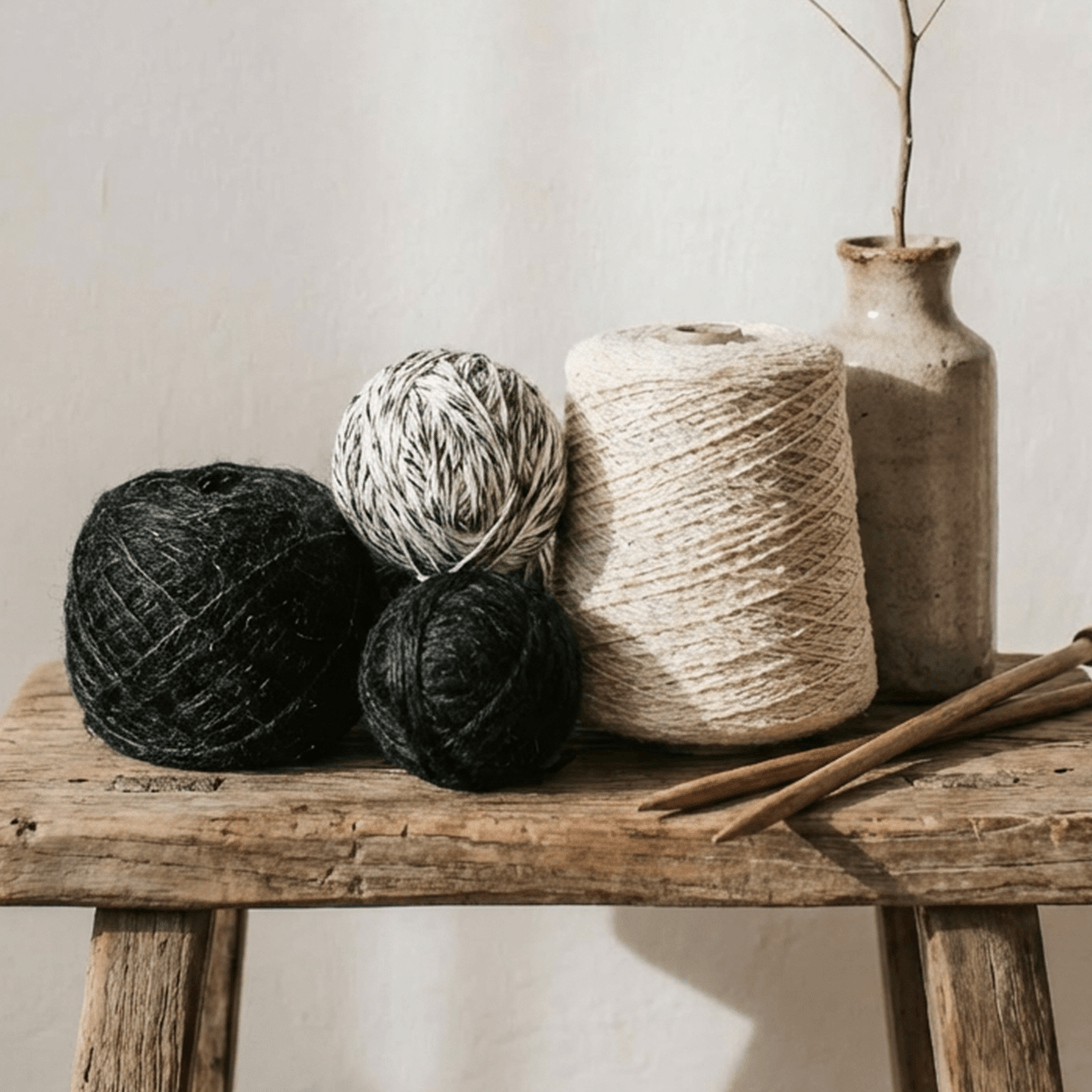
Cone yarn isn't just usable for warping — it's arguably the ideal form for it, which is no accident. Cones were designed for industrial looms, and their advantages carry straight over to the handweaver.
- It feeds off smoothly. A cone is built to release yarn evenly and continuously from a stationary base — exactly what you want when measuring a long, even warp. This is the cone's original purpose, as our guide to why cone yarn is made for weaving explains.
- It holds enough yarn. A single cone carries far more yardage than a ball or skein, so you can measure an entire warp — often a whole project — from one cone with no joins to weaken the warp.
- It sits still while you work. Unlike a ball that rolls away, a cone stays put on a cone holder and pays out cleanly, keeping your tension even from the first thread to the last.
A cone is a warp waiting to happen. It feeds evenly, holds a whole project's worth of yarn, and sits still while it pays out — which is exactly what even, joinless warping asks for.
A simple cone holder
To use a cone for warping, you want it standing upright and feeding from the top, so it unwinds without rolling. A purpose-made cone stand works, but you don't need one to begin. A common improvisation: put a dowel rod through a milk crate and slide the cone onto the dowel, so the cone sits like a spool on a spit and pays out freely. Anything that keeps the cone upright and lets it feed from the top will do.
Direct vs indirect warping: which method
There are two broad ways to measure and mount a warp, and the right one depends mostly on your loom.
| Method | How it works | Best for |
|---|---|---|
| Direct warping | Yarn goes straight from cone to loom via a single warping peg | Rigid-heddle looms, shorter warps, beginners |
| Indirect warping | Warp is measured on a warping board or mill first, then transferred to the loom | Longer warps, floor looms, multiple colours |
| Sectional warping | Warp is wound onto a sectional beam in narrow sections, straight from a creel of cones | Very long or wide warps; cones shine here |
If you have a rigid-heddle loom, direct warping is the usual and friendliest starting point — the yarn runs straight from the cone, around a single peg clamped at your warp's length, and onto the loom. If you have a floor loom or a long, multi-coloured warp, you'll likely measure on a warping board first. And if your loom has a sectional beam, cones come into their own: sectional warping feeds directly from a creel of cones onto the beam in sections, the closest a handweaver comes to how mills do it.
The one thing that decides everything: even tension
If you take away a single idea, let it be this. The most common cause of a disappointing woven fabric isn't the yarn or the pattern — it's uneven warp tension. When some threads are tighter than others, the loose ones sag, the tight ones bear all the strain, the shed (the opening you throw the weft through) is messy, and the finished cloth puckers and lies unevenly.
So every stage of warping is really in service of even tension:
- When measuring, keep a light, consistent tension on the yarn — not tight, just even. Winding one thread at a time until you're experienced keeps it honest.
- When winding onto the beam, keep firm, even tension across the whole width, and use warp separators (sticks, or a roll of kraft paper) between layers so threads don't sink into the layers below and lose tension.
- When tying on, tie in small, even bundles and adjust until every bundle has the same tension. Press the flat of your hand across the warp: it should feel like a drum, even everywhere.
Uneven tension is the single biggest cause of woven disappointment. Every fiddly warping step exists for one reason: to get every thread to the same, even tension. Get that, and the weaving is easy.
Keeping order: chokes, leases, and raddles
The warp's other enemy is tangling and threads swapping places. A few simple tools keep everything in order, and they're worth knowing by name so instructions make sense.
- Choke ties are loose loops of scrap yarn tied around the warp bundle at intervals, holding the threads together so the warp can't spill into chaos while you move it from peg or board to loom.
- The lease (or cross) is a deliberate figure-eight crossing made as you measure, which keeps every thread in its exact order. Held open with lease sticks, it lets you thread the loom in the right sequence without threads jumping their place.
- A raddle is a comb-like bar that spaces the warp evenly across its width as you wind it onto the beam, so the warp goes on at the correct width without bunching.
None of these is complicated, and each solves a specific way the warp can go wrong. Together they're why a careful warp stays orderly from first thread to last.
Threading and sleying
Once the warp is measured and wound on, each end is threaded through a heddle (following your pattern) and sleyed through the reed — the comb that sets how many ends sit per inch, which is your sett. This is slow, quiet work, and the place small errors hide, so it rewards patience and a check as you go: a misthreaded end or a skipped dent is far easier to fix now than after you've woven six inches. Your yarn's thickness decides your sett — finer yarn, more ends per inch — a calculation our guide to warp and weft works through.
Do you need to size (starch) the warp?
Here is a question that worries new weavers, often needlessly. In industrial weaving, warp threads are sized — coated in a starch or "slasher" size — to protect them from the abrasion of high-speed machine weaving. You may read about sizing and wonder if you must do it too.
For almost all handweaving, you don't. Hand looms are gentle compared to industrial machines, and a warp yarn chosen well — strong, smooth, and firmly plied — will withstand hand weaving without any coating. The honest answer is that sizing is an industrial solution to an industrial problem. If you find a particular warp is shedding or abrading (a fragile singles yarn, say), there are gentle handweaver's sizings and the option of a spray, but they're the exception, not a step you must learn. Far simpler is to choose a sound warp yarn in the first place — which returns us to the point that good weaving starts with the right yarn in the right role.
A calm order of work
Put together, warping with a cone follows a steady sequence. None of it is hard; it simply rewards doing one thing at a time, unhurried.
- Choose a sound warp yarn and set the cone on a holder so it feeds from the top.
- Measure the warp to length and thread count, keeping light, even tension, and put in a lease and choke ties as you go.
- Wind onto the beam under firm, even tension, spacing with a raddle and separating layers with sticks or paper.
- Thread each end through the heddles to your pattern, then sley through the reed to your sett.
- Tie on in small bundles, then adjust until the tension is even as a drumhead across the whole warp.
- Weave a few rows, check the fabric, adjust tension if needed — then settle in.
The short version
Warping is the process of getting the lengthwise warp threads onto your loom, in order and under even tension, before weaving. It runs from measuring the warp, to winding it onto the beam, to threading through the heddles and reed, to tying on — and the one goal underneath every stage is even, consistent tension, which is what decides whether your cloth lies flat and true. Cone yarn is ideal for warping because it feeds off smoothly, holds a whole project's yardage without joins, and sits still on a simple holder while it pays out. Rigid-heddle weavers usually direct-warp; floor looms often measure on a board; sectional beams feed straight from cones. And you almost never need to size a hand warp — just choose a strong, smooth warp yarn to begin with, and warp slowly, one step at a time.
Frequently asked questions
What does warping a loom mean?
Warping is the process of putting the warp — the lengthwise threads — onto your loom, correctly ordered and under even tension, so you can weave. It includes measuring the warp to the right length and number of threads, winding it onto the loom's beam, threading each end through the heddles and reed, and tying on. The goal at every stage is to get all the threads parallel and evenly tensioned.
Can you use cone yarn for warping a loom?
Yes — cone yarn is ideal for warping. A cone feeds off smoothly and continuously from a stationary holder, which is exactly what you want for measuring an even warp, and it holds enough yardage to warp a whole project without joins that would weaken the warp. Cones were originally designed for industrial looms, so their advantages carry straight over to the handweaver. Just stand the cone upright so it feeds from the top.
How do you keep even tension when warping?
Keep a light, consistent tension while measuring (winding one thread at a time helps), firm and even tension across the full width while winding onto the beam, and use warp separators between layers so threads don't sink and loosen. When tying on, work in small even bundles and adjust until pressing your hand across the warp feels evenly taut, like a drumhead. Even tension is the single most important thing in warping.
What's the difference between direct and indirect warping?
In direct warping, the yarn goes straight from the cone to the loom around a single warping peg — simplest for rigid-heddle looms and beginners. In indirect warping, you measure the warp on a warping board or mill first, then transfer it to the loom — better for longer or multi-coloured warps and floor looms. If your loom has a sectional beam, sectional warping feeds directly from a creel of cones.
Do you need to size or starch a warp for hand weaving?
Almost never. Sizing — coating warp threads in starch — is an industrial step that protects yarn from the abrasion of high-speed machine looms. Hand looms are far gentler, so a well-chosen warp yarn that is strong, smooth, and firmly plied will weave beautifully without any coating. If a fragile yarn sheds or abrades, gentle handweaver's sizings exist, but choosing a sound warp yarn in the first place is simpler and better.
Why does my woven fabric come out uneven?
The most common cause is uneven warp tension. When some warp threads are tighter than others, the loose ones sag and the tight ones bear all the strain, giving a messy shed and a puckered, uneven cloth. The fix is in the warping: keep tension even at every stage, use a raddle to space the warp and separators between layers, and adjust the tie-on until the whole warp feels evenly taut before you weave.
Some yarns don't come back.
That Yarn drops new mill-end on the 1st and 15th.
Have a question about a specific cone? Write to us at hello@thatyarn.com — we answer every email.