That Yarn · Journal
The Weaver's Cone: Why Cone Yarn Is Made for Weaving
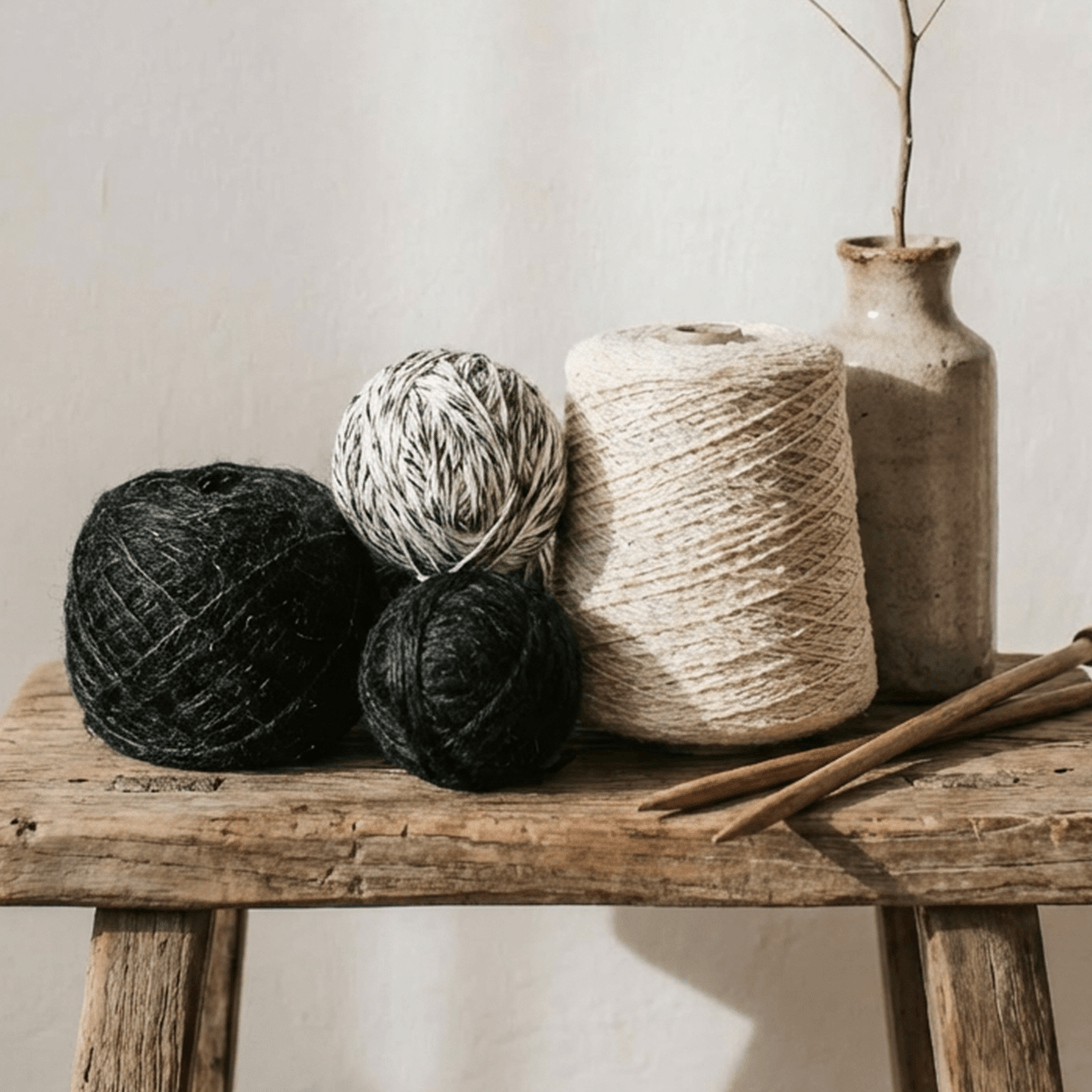
Knitters discovered cone yarn recently. Weavers have always known. The cone is not a knitting product a weaver borrows — it is, quietly, a weaving product first, shaped by the loom's own demands.
 Much of the writing about cone yarn treats it as a knitter's find: a large, economical alternative to the retail skein. That is true, but it tells only half the story. For weavers, the cone was never an alternative to anything. It is the form the loom asks for — the way weaving yarn has been packaged, unwound, and warped for as long as there have been mills. If you weave, cone yarn is not a workaround. It is home ground.
Understanding why the cone suits the loom so well — and how a weaver chooses yarn differently from a knitter — is the foundation of working with mill-end cones. It begins with the shape of the cone itself.
Why the shape of a cone matters
A cone is not just a bigger package. Its tapered shape does something a ball or skein cannot, and it is exactly what a loom needs.
When yarn is drawn off a cone in the direction of its tip, the taper releases the yarn progressively — each wrap lifts away cleanly, with few surface entanglements, and the yarn flows off in a smooth, even stream. This holds true even at the speed and steady pull of warping. A ball or centre-pull cake cannot match it: pulled quickly, they tangle, roll, and feed unevenly. That even, snag-free flow is not a nicety for a weaver — it is the difference between a calm warping session and a frustrating one.
The cone's taper is engineered for one thing above all: yarn that flows off evenly, without tangling, under a steady pull. That is precisely what warping a loom demands — which is why the cone and the loom have always belonged together.
Warping is literally "turning cones into cloth"
Here is a detail that makes the cone's role vivid. In the textile industry, the technical definition of warping is the conversion of cones into a beam — the process of taking yarn from cones and winding it, under even tension, into the warp that will become cloth.
The hand weaver's warping board, mill, or wheel does the same thing at human scale. And here the cone shows a second advantage: a single cone can supply an entire warp. There is no stopping to join a new ball, no winding yarn off into a workable form first — you set the cone on the floor or a rack, draw the thread up, and wind. Changing colours or warp lengths is simple. One cone, one continuous warp, is the natural unit of weaving.
A cone → feeds smoothly, holds a whole warp's length, sits and dispenses cleanly
For warping, the cone simply is the right tool
Weaving asks for more yarn — which is where mill-end shines
A woven project, especially the warp, uses a great deal of yarn — often far more than a knitted piece of the same size, because the warp alone can run to hundreds of ends across the width, each the full length of the cloth. This makes weaving an expensive habit at retail skein prices, and it is exactly where surplus and mill-end cones change the arithmetic.
Buying weaving yarn as mill-end means acquiring the quantity a loom needs at a fraction of retail cost, in the very form the loom wants. The large cone that feels like an overcommitment to a knitter is, to a weaver, simply the right amount. Our guide to buying surplus and mill-end yarn makes the wider case, and it applies doubly at the loom.
Warp and weft ask different things of a yarn
This is the single most useful thing a weaver can know about choosing yarn, and where a weaver's judgment departs most from a knitter's. The two directions of a woven cloth place completely different demands on the yarn.
Warp — the yarn under tension
The warp threads run the length of the loom and are held under constant tension while you weave, rubbing against the heddles and reed with every pass. A warp yarn therefore has to be strong, smooth, and low in stretch. It needs to survive abrasion and tension without breaking or fraying. This usually means a firmly plied yarn rather than a delicate single, and a fiber with reasonable strength. A soft, loosely spun, or very elastic yarn — lovely as it may be — will shed, pill, or snap under warp tension.
Weft — the yarn with freedom
The weft is woven across the warp and carries none of that tension. This is where a weaver has freedom: the weft can be soft, lofty, elastic, textured, even a little fragile. Bloomy woollen-spun yarns, singles, brushed yarns, and softer luxury fibers that would never survive as warp are perfect as weft, where they add colour, warmth, and character to the cloth.
| Warp | Weft | |
|---|---|---|
| Under tension? | Yes, constantly | No |
| Needs to be | Strong, smooth, low-stretch | Anything you like |
| Good choices | Firm plied yarns; strong fibers | Soft, lofty, textured, fine |
| Avoid | Soft singles, very elastic yarns | Little to avoid |
A great deal of yarn confusion dissolves once this is clear: a yarn is not simply "good for weaving" or not — it may be a poor warp and a wonderful weft. Knowing which role you are filling tells you what to look for. Our guide to judging a yarn's quality covers the strength and consistency that matter most for warp.
Reading a cone for weaving
A few practical notes for choosing and using mill-end cones at the loom.
- Check the count for your sett. A cone label's count (like 2/28) tells you the yarn's fineness, which determines how many ends per inch it wants. Our guide to reading a cone label decodes those numbers, and the guide to yarn measurement turns them into a usable thickness.
- Test warp strength before committing. For warp, do the simple break test — pull a length between your hands. If it snaps easily or frays, it belongs in the weft. A firm, plied cone that holds is a warp candidate.
- Expect the yarn to change after washing. Mill-end cone yarn is often unfinished; the woven cloth will bloom and settle when washed off the loom, sometimes dramatically. Sample and wet-finish a small piece before judging the fabric — the same principle as swatching, explained in our guide to blooming.
- Buy enough for the whole warp at once. Because mill-end is finite, and because a warp can't be joined mid-length invisibly, secure a project's worth in one go.
A cone earns its place at the loom twice: once for the way it feeds, and once for the way it lets you buy real weaving yarn — by the quantity a warp needs, in the form the loom wants.
The short version
Cone yarn is not a knitting product weavers borrow. Its tapered shape releases yarn evenly under a steady pull, which is exactly what warping demands; a single cone can supply a whole warp; and its quantity, so generous to a knitter, is simply right for the loom — especially as affordable mill-end. Choose it knowing that warp and weft ask different things: strong, smooth, low-stretch yarn for the tension of the warp, and near-anything you love for the freedom of the weft. Understand that, and the cone reveals what it always was — a weaver's tool, first and foremost.
Frequently asked questions
Why is cone yarn good for weaving?
Because the cone's tapered shape releases yarn progressively and evenly when drawn off the tip, with few tangles, even under the steady pull of warping — something a ball or skein can't match. A single cone can also supply an entire warp without joins, and its large quantity suits weaving's high yarn use, especially as affordable mill-end.
What's the difference between warp and weft yarn?
Warp threads run lengthwise on the loom under constant tension and abrasion, so they must be strong, smooth, and low in stretch — usually a firm plied yarn. Weft is woven across and carries no tension, so it can be almost anything: soft, lofty, textured, or fine. A yarn can be a poor warp but a wonderful weft.
Can I use any cone yarn as warp?
No — warp yarn needs enough strength and smoothness to survive tension and abrasion without breaking or fraying. Test a length with a simple break test: if it snaps easily or sheds, use it as weft instead. Firm, plied cones from strong fibers make good warp; soft singles and very elastic yarns are better as weft.
How much cone yarn do I need for a weaving project?
Weaving, especially the warp, uses a lot of yarn — often more than a knitted piece of the same size, since the warp runs many ends across the full length of the cloth. Calculate from your sett (ends per inch), width, and warp length, and buy enough for the whole warp at once, since mill-end is finite and warps can't be joined invisibly mid-length.
Does woven cloth from mill-end cone yarn change after washing?
Yes. Mill-end cone yarn is often unfinished, so the cloth blooms, softens, and settles when washed off the loom — sometimes dramatically. Always weave and wet-finish a small sample before judging the fabric, just as a knitter swatches and washes. The washed sample shows the true cloth; the yarn on the cone does not.
Do I need to wind cone yarn before warping?
No — that's one of the cone's advantages. You can warp directly from the cone, setting it on the floor or a rack and drawing the thread up, with no need to wind it into balls first. The cone feeds smoothly and holds enough for a whole warp, which is why it's the natural package for the loom.
Some yarns don't come back.
That Yarn drops new mill-end on the 1st and 15th.
Have a question about a specific cone? Write to us at hello@thatyarn.com — we answer every email.