That Yarn · Journal
Cone Yarn vs Ball Yarn: What's the Difference?
The short answer: same fiber, different stage of finishing, different buyer. The useful answer is knowing which one your next project actually wants.
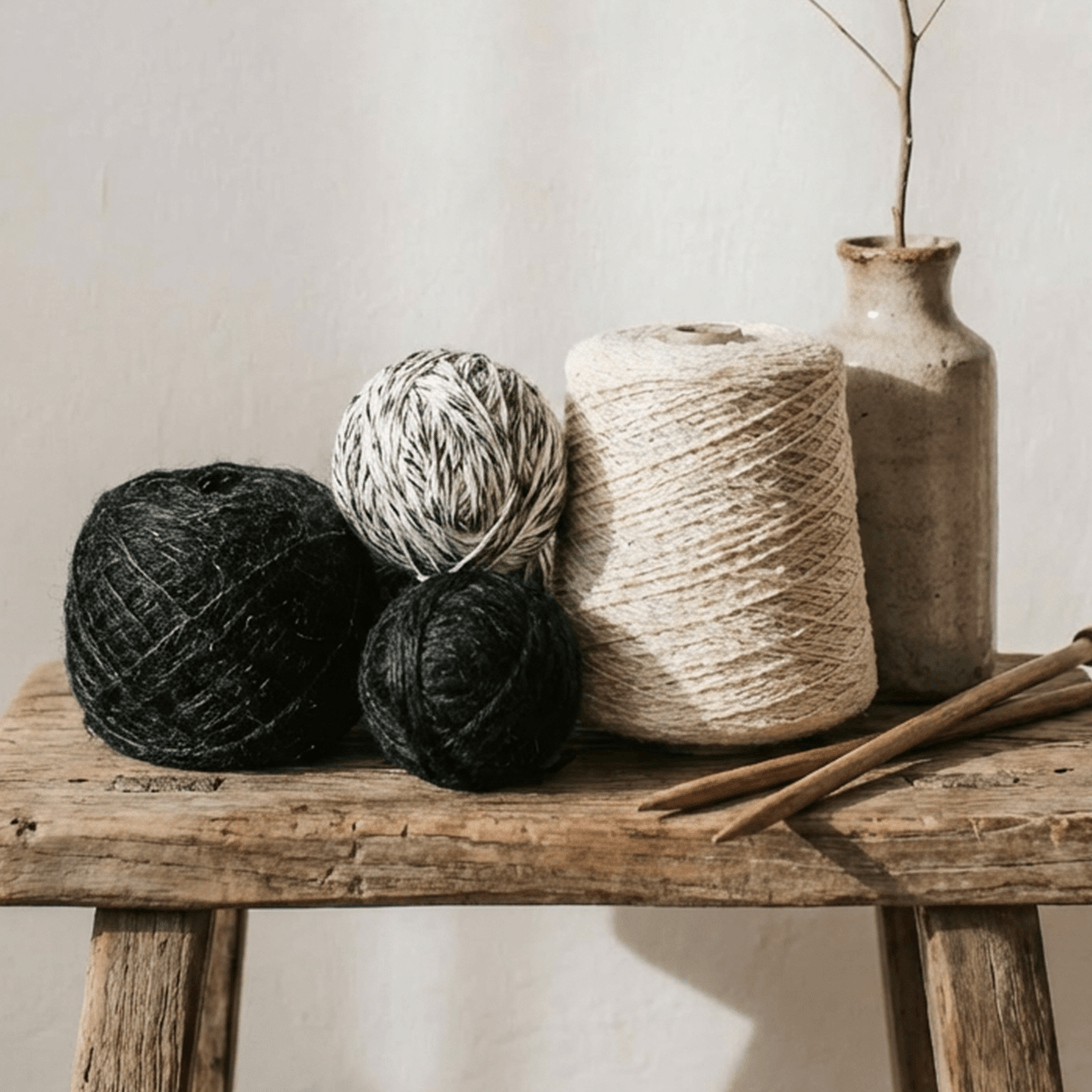
A cone and a ball can hold the identical wool, spun in the identical mill. Put side by side they look like different products — one heavy and tightly wound, the other soft and shelf-ready — but the difference between them is not quality, and not usually even fiber. It is where each was stopped in its journey, and who it was made for.
This guide sets the two against each other cleanly, so that by the end you can look at a project and know which to reach for.
The one-line difference
A ball or skein is yarn finished for a person: washed, softened, wound loosely, and sold in small standardised amounts, ready to knit the moment it arrives.
A cone is yarn prepared for a machine: wound in large continuous lengths under tension, often still carrying spinning oil, and sold unfinished — because the factory that buys it finishes the fabric later, itself.
The difference is the finishing stage and the intended buyer — not the fiber, and not the quality. A cone is not a lesser ball. It is an earlier one.
If the idea of an "unfinished" yarn is new, our guide to what cone yarn is covers the full picture first. What follows here is strictly the comparison.
The comparison, in full
| Cone yarn | Ball / skein yarn | |
|---|---|---|
| Made for | Machines; industrial knitting and weaving | Hand knitters and crocheters |
| Finishing | Unfinished; may carry spinning oil | Washed, softened, ready to use |
| Winding | Large, continuous, under tension | Small, loose, easy to handle |
| Quantity | Often enough for a whole garment | Standardised, small put-ups |
| Label system | Nm count | Weight category (DK, fingering…) |
| First impression | Firm, sometimes rough | Soft, familiar |
| Colour | One large batch; very even within a cone | Small dye lots; may vary between them |
| Reorders | Rare — surplus lots are finite | Usually available to reorder |
| Preparation needed | Rewind, swatch, wash before judging | None; cast on directly |
| Value | Often mill-quality fiber below retail price | Retail pricing |
Two comparisons worth getting right
Two rows in that table are routinely misunderstood, and both are worth pausing on because they cut against the intuition.
Colour and consistency
It is often assumed that retail yarn is the more colour-consistent of the two. Within a single project, the opposite is usually true. A cone is wound from one large mill batch, so a whole garment knits from a single, remarkably even run of colour. Retail balls come in small dye lots that can differ from one another, which is why patterns warn you to buy all your balls in the same lot.
The genuine trade is elsewhere: a ball's dye lot can usually be reordered, while a cone, being surplus, generally cannot. Cone gives you consistency now; ball gives you the safety of a second chance later.
Fiber quality
The cone's industrial appearance suggests a humbler fiber. Frequently the reverse is true. A great deal of cone yarn is surplus from high-end knitwear production — the same mills that supply luxury fashion — so a plain grey cone can hold a merino-cashmere blend that would carry a premium as a finished skein. The difference is preparation and presentation, not composition.
Which should you choose?
Neither is better. They suit different projects and different moments. Read down whichever column matches what you are about to make.
| Reach for a cone when… | Reach for a ball when… |
|---|---|
| The project needs large yardage — a garment, blanket, or weaving warp | The project is small — a gift, an accessory, a sample |
| You want one continuous, single-batch length with no joins | You want to cast on immediately, with no preparation |
| You want mill-quality fiber at better value | You are new to knitting and want the familiar |
| You are happy to swatch, wash, and finish the yarn yourself | The pattern is written to exact retail skein amounts |
| You enjoy building weight by holding strands together | You want the yarn to behave exactly as the label says, today |
A useful rule of thumb: if the project is large, or you value the material over the convenience, lean cone. If the project is small, or you want to start this minute with no fuss, lean ball. Many makers keep both, and choose per project rather than by allegiance.
Honest limitations of each
Fairness means naming what each asks of you.
A cone arrives unfinished, so it must be prepared: rewound to release tension, swatched, and washed before you can trust its gauge and hand. It reads in Nm, not a familiar weight category. It is often fine, so you may need to hold several strands. And when a lot is gone, it is usually gone for good. None of this is difficult, but all of it is real.
A ball asks less, and gives less in return: retail pricing, small quantities that mean joining and lot-matching on a large project, and a narrower range of the mill-quality and specialty fibers that reach makers mainly as surplus.
Working with a cone, briefly
If you choose a cone, three short steps bridge the gap — each covered in depth elsewhere in the Journal.
- Read the count. Convert its Nm to meters per 100g, and hold strands if it is fine. See yarn weight and Nm.
- Prepare it. Rewind to release tension; knit by hand, weave, or crochet. See using cone yarn by hand.
- Wash before judging. A cone blooms softer after washing and shifts gauge. See blooming.
The difference, settled
A ball is yarn someone else finished for you, in a small, convenient, ready amount. A cone is yarn left for you to finish, in a large, continuous, unfinished one — often the very same fiber, at an earlier stage and a better value, waiting for the decisions a factory would otherwise have made.
Choose the ball for ease and the reorder. Choose the cone for the material, the yardage, and the pleasure of finishing it yourself. Neither is the right answer. The project is.
Frequently asked questions
What is the main difference between cone yarn and ball yarn?
The finishing stage and the intended buyer. A ball is finished for hand knitters — washed, softened, ready to use. A cone is prepared for machines — wound large and continuous, often still carrying spinning oil, and sold unfinished. The fiber is frequently identical; the difference is not quality.
Is cone yarn lower quality than ball yarn?
No. Much cone yarn is surplus from high-end knitwear production, so the fiber can equal or exceed retail yarn. A plain cone may hold a luxury merino-cashmere blend. The difference is preparation and presentation, not fiber composition.
Which is more colour-consistent?
Within a single project, a cone usually is, because it is wound from one large mill batch. Retail balls come in small dye lots that can vary. The advantage of balls is that a lot can often be reordered, while a surplus cone usually cannot.
Is cone yarn cheaper than ball yarn?
Often, yes — because much of it is mill-end surplus, offering mill-quality fiber below what the finished retail yarn would cost. The trade is that it arrives unfinished and must be prepared, and that a sold-out lot rarely returns.
Can I use cone yarn like ball yarn?
Yes, with a little preparation. Rewind the cone to release tension, hold multiple strands if the yarn is fine, and always swatch and wash before committing, since cone yarn blooms softer after washing. Once prepared it hand knits, weaves, and crochets like any yarn.
When should I choose a ball over a cone?
For small projects and gifts, when you want to cast on immediately with no preparation, when a pattern specifies exact retail skein amounts, or when you are new to knitting and prefer familiar, ready-to-use yarn.
Why does cone yarn have no reorders?
Because much of it is surplus — the remainder of a finished production run. When a cone lot sells out, the dye batch and the run are gone. Buying enough for a whole project at once is simply how surplus works.
Some yarns don't come back.
That Yarn drops new mill-end on the 1st and 15th.
Have a question about a specific cone? Write to us at hello@thatyarn.com — we answer every email.