That Yarn · Journal
Are Cone Yarns Just for Machines? Absolutely Not.
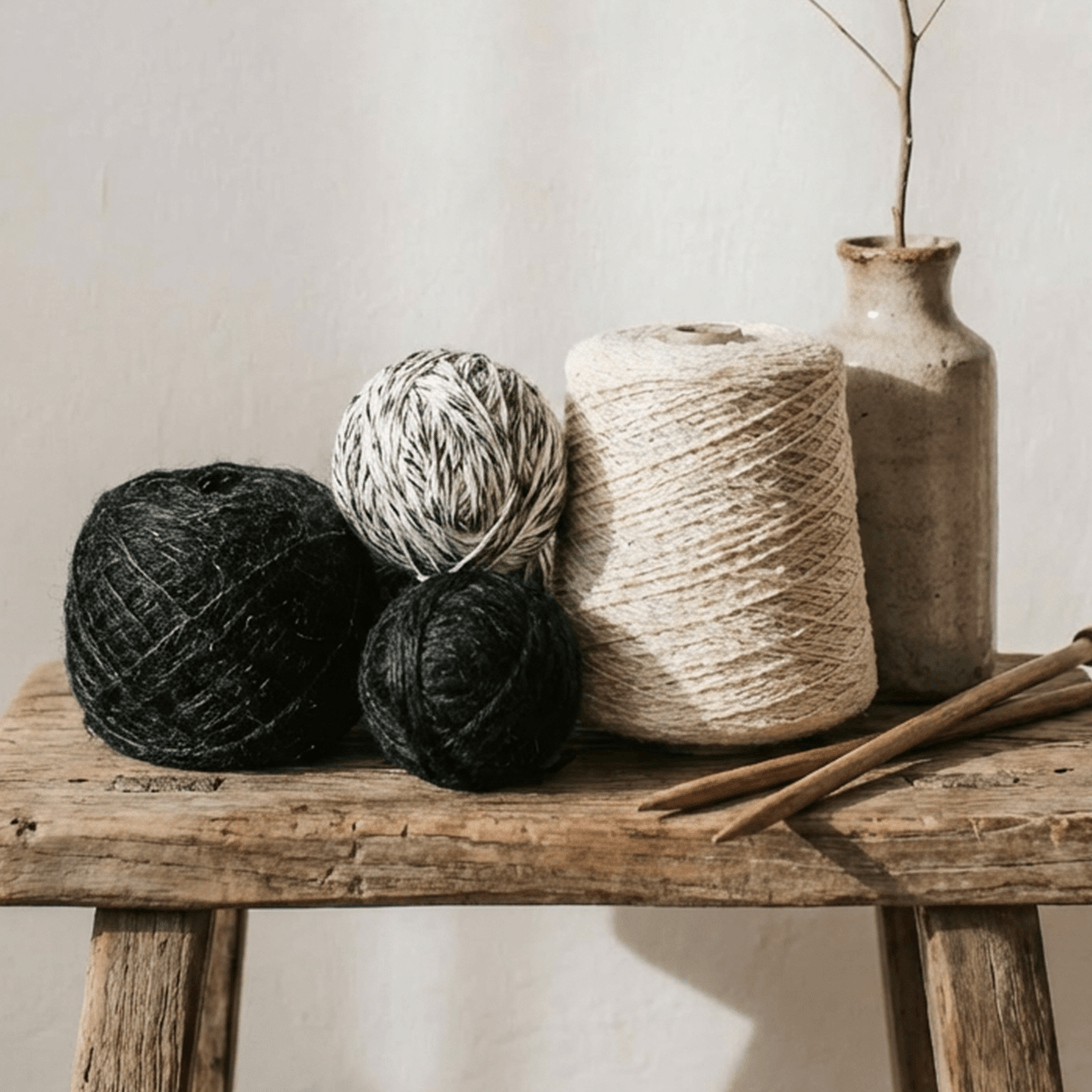
A cone was wound for a machine, but it was never bound to one. Three small adjustments turn industrial yarn into something you can knit, weave, or crochet by hand.
The doubt is understandable. A cone looks like factory equipment — heavy, wound tight, spun finer than any ball on a yarn-shop shelf. It is fair to wonder whether it was ever meant for human hands at all.
It was not, originally. And that is exactly the point worth understanding, because the small ways a cone resists hand use are all predictable, and all easily solved. Once you know what a machine yarn is doing and why, working with it by hand becomes not just possible but genuinely rewarding. This is the how.
Why a machine yarn resists the hand — at first
Three things make a fresh cone feel awkward to a hand maker. None of them is a defect; each is a design choice made for a machine, and each has a simple answer.
| The obstacle | Why it exists | The fix |
|---|---|---|
| It is very fine | Machines knit at fine gauges | Hold multiple strands together |
| It is wound tight | Even tension feeds machines cleanly | Rewind to release the tension |
| It twists as it leaves the cone | Yarn pulled over the tip adds or loses twist | Unwind from the side, or rewind first |
Solve these three and a cone behaves like any other yarn — often better, because the fiber underneath was spun to industrial standards. If the underlying idea of what a cone is feels unfamiliar, our guide to what cone yarn is covers the ground first.
The fineness question, and holding strands
Most cone yarn is spun finer than hand knitters are used to, because machines routinely knit at fine gauges a hand maker rarely attempts. A single strand can be lace-weight or finer — beautiful, but slow going on hand needles.
The answer is not to abandon the yarn. It is to hold several strands together, building the weight you want. This is native to how cone yarn is used, and it is the source of its flexibility: one cone becomes lace, fingering, sport, or DK depending on how many strands you run.
Meters per 100g held = single-strand meters per 100g ÷ number of strands
A fine cone at 1,500 meters per 100g becomes a comfortable fingering-to-sport weight at five strands held together. Our guide to yarn weight and Nm gives the full arithmetic, including how to read the count on the label.
Holding strands is not a compromise. It is the technique the yarn was designed around — and it lets a single cone serve half a dozen different projects at half a dozen different weights.
Holding different yarns together
Building weight from identical strands is only the beginning. The more interesting move — and the one that turns cone yarn into a medium for the artist rather than just a supply — is holding different yarns together. Here one strand is chosen for structure and another for atmosphere, and the combination becomes something neither could be alone.
A few pairings that reward the experiment:
| Pairing | One strand gives | The other gives |
|---|---|---|
| Wool + mohair / brushed | Stitch definition, structure, memory | Halo, lightness, a luminous surface |
| Cotton + linen | Softness, even body | Crisp texture, cooling dryness |
| Filament / lurex + bouclé or slub | Sheen, a thread of light | Irregular texture, visual depth |
This is second-order making — composing a yarn rather than simply choosing one. A base cone gives the fabric its hand and behaviour; a companion strand of mohair, silk, or a fancy yarn gives it character. The base strand does the structural work and largely disappears; the companion is what the eye sees.
And here cone yarn has a quiet practical advantage. Cone paired with cone is the easiest multi-strand work there is. Cones are large and stable — set them on the floor, on a table, or even hanging on the wall, and they feed together smoothly, at matched industrial tension, in continuous lengths with no joins — none of the rolling, tangling, and mismatched yardage that plague holding several retail balls together. The format that was built for a machine turns out to be built for the yarn artist too.
The twist question, and how to unwind
This is the subtle one, and the one most guides skip. When you pull yarn straight up over the pointed tip of a cone, each wrap that comes off adds a tiny amount of twist to the strand — or removes it, depending on direction. Over a whole project, that accumulated twist can make the yarn kink, bias, or feel harder to work.
Machines avoid this by feeding yarn a particular way at speed. Hand makers have two easy options.
- Rewind the cone into a cake or ball using a ball winder, which resets the twist and releases the mill's winding tension at the same time. This is the reliable choice for knitting.
- Unwind from the side rather than over the tip — stand the cone on the floor or a table, or set it on a lazy-kate, and let the yarn come off the side as the cone turns. This avoids adding twist, though it feeds less smoothly than a rewound cake.
For a small project, knitting straight from a side-fed cone is fine. For a sweater's worth of yarn, rewind — it releases tension, resets twist, and lets air back into the strand all at once.
By craft: how each one uses a cone
Hand knitting
Rewind the cone, decide your strand count, and knit as normal. Because the fiber is often very fine, most knitters hold two to six strands together. Swatch and wash before committing — cone yarn arrives unfinished and blooms softer once washed, shifting its gauge. Our guide to blooming explains what to expect.
Weaving
This is where cone yarn genuinely excels, and where weavers have always known the answer to this article's question. The even tension and continuous length that serve knitting machines serve a loom just as well. A fine cone makes excellent warp — strong, consistent, and long enough to dress a loom without joins. It also feeds beautifully from a cone stand, no rewinding required, because a loom's tension system manages the twist for you.
Crochet, macramé, and mixed media
Crochet handles fine yarn gracefully, and the precise control a cone gives over yardage suits detailed work — you use exactly what a piece needs from a single continuous source. Macramé and mixed-media makers value cones for the same reason: large, uninterrupted quantities in a consistent fiber.
Hand spinning and plying
Spinners use fine cones as a ready-made single for plying — combining commercial strands, or plying a cone strand with a handspun one to add strength or sheen. It is a fast route to a custom yarn without spinning the base thread yourself.
What you will want on hand
None of this requires a workshop. A few inexpensive tools make cone yarn effortless.
| Tool | What it does | Essential? |
|---|---|---|
| Ball winder | Rewinds cone into a usable cake | Highly recommended |
| Cone stand or lazy-kate | Feeds yarn from the side, avoiding twist | Useful alternative |
| A bowl or jar | Contains a small cone or ball while it feeds | Works in a pinch |
| Yarn guide or tension bracket | Steadies multiple strands held together | Nice for multi-strand work |
For holding several strands, the simplest method costs nothing: stand each cone on the floor a little apart — or hang them — and let the strands rise together to your hands. Large cones are stable enough not to roll, so they need no container. No tangling, no special equipment.
A note on what you are working with
One honest correction to a common assumption. Cone yarn is not always meticulously dyed and finished — much of it is undyed, in natural fiber tones, or carries spinning oil from the mill and has not been washed at all. That is not a flaw. It is the yarn in its raw, pre-finished state, waiting for you to complete it.
That unfinished quality is precisely what makes cone yarn rewarding to a hand maker: you finish it yourself, to your own standard, rather than accepting a mill's decision made for an average garment. The roughness on arrival is packaging, not character.
So — just for machines?
Absolutely not. A cone was wound for a machine, but everything that made it machine-ready — the fineness, the length, the even tension, the industrial consistency — turns out to serve the hand just as well, once you know the three small adjustments that bridge the gap.
Weavers never doubted this. Knitters, crocheters, spinners, and mixed-media makers are simply discovering what a loom has always known: a cone is not a limitation. It is raw material, in its most generous form.
Frequently asked questions
Can you hand knit with cone yarn?
Yes. Rewind the cone to release tension, hold several strands together if the yarn is fine, and knit as normal. Swatch and wash first, since cone yarn arrives unfinished and blooms softer after washing. Many knitters find cone yarn better than retail once prepared, because the fiber is spun to industrial standards.
Do I need to rewind cone yarn before using it?
For knitting, it is strongly recommended — rewinding into a cake releases the mill's winding tension and resets the twist the yarn picks up coming off the cone's tip. For weaving, it is usually unnecessary, since a loom feeds cleanly from a cone stand and manages tension itself.
Why does yarn twist or kink when I pull it off a cone?
Because pulling yarn over the pointed tip of a cone adds a small amount of twist with every wrap. Over a project this accumulates. Avoid it by unwinding from the side — stand the cone on the floor, a table, or a cone stand — or by rewinding it into a cake first.
Is cone yarn good for weaving?
Exceptionally. Its even tension and long continuous length make excellent warp and weft, and it feeds straight from a cone stand without rewinding. Weavers have long preferred cone yarn for exactly these reasons.
How many strands of cone yarn should I hold together?
It depends on the yarn's fineness and the weight you want. A fine cone at 1,500 meters per 100g reaches a comfortable fingering-to-sport weight at about five strands. Divide the single-strand meterage by the number of strands to find your finished weight.
Can I hold different yarns together, not just the same one?
Yes — and it is one of the most creative ways to use cone yarn. Pair a structural strand with an atmospheric one: wool with mohair for halo, cotton with linen for cool texture, a filament or lurex with a bouclé for sheen and depth. The base strand carries the fabric's behaviour while the companion gives it character. Cone paired with cone is especially easy, since both feed at matched tension in continuous lengths.
Can you crochet with cone yarn?
Yes, and crochet handles fine yarn especially well. The precise control a cone gives over yardage suits detailed work, letting you use exactly what a piece needs from one continuous source. Rewind or side-feed to avoid twist, as with knitting.
What tools do I need to use cone yarn by hand?
Very few. A ball winder is the most useful, for rewinding cones into cakes. A cone stand or lazy-kate helps feed yarn from the side, though a large cone stands stably on the floor or a table on its own. For holding strands, stand each cone a little apart so they feed without tangling.
Some yarns don't come back.
That Yarn drops new mill-end on the 1st and 15th.
Have a question about a specific cone? Write to us at hello@thatyarn.com — we answer every email.