That Yarn · Journal
Mill-Dyed Specialty Cones: Where the Colour Comes From
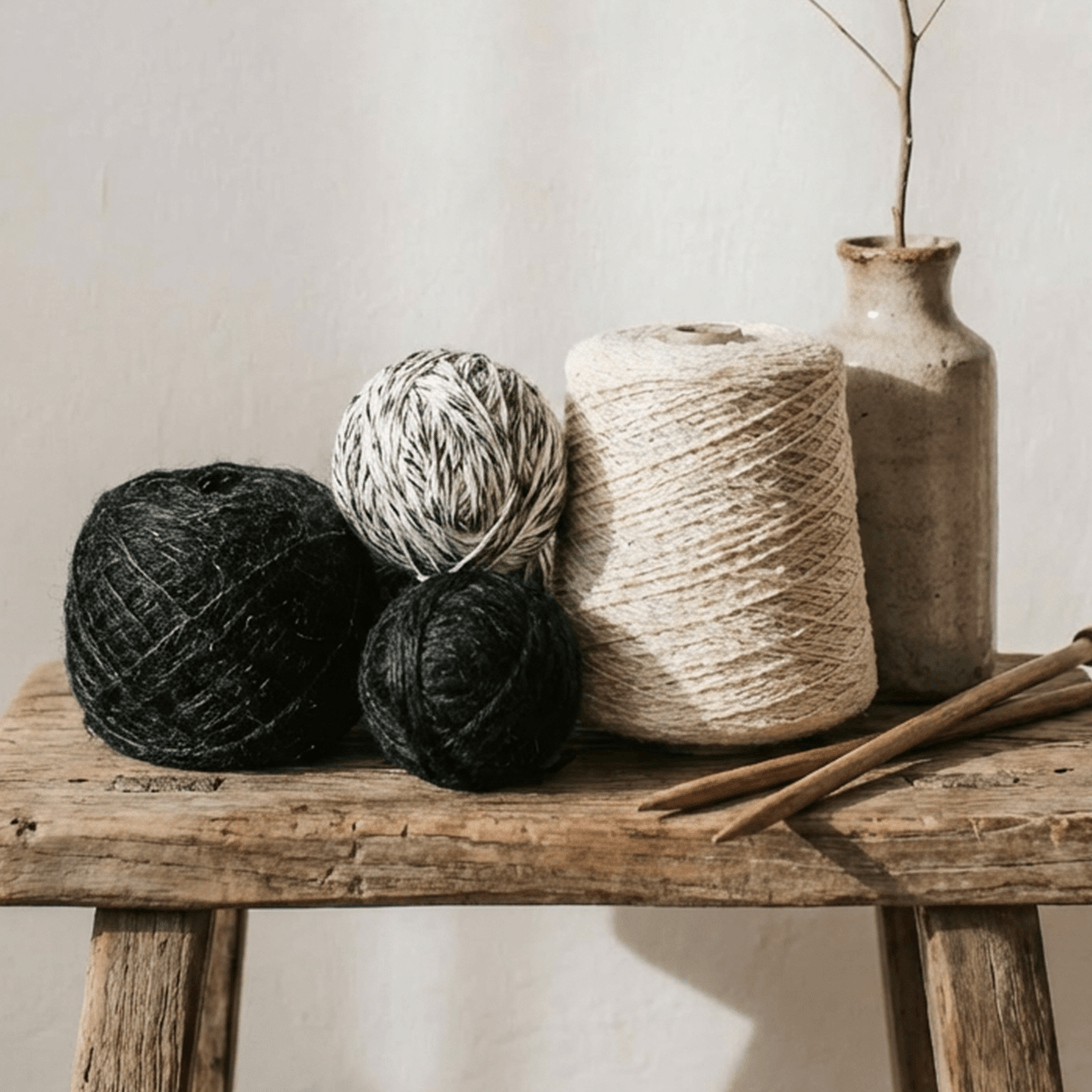
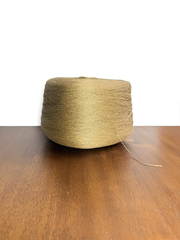
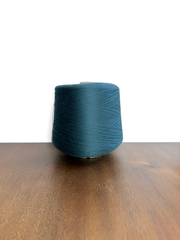
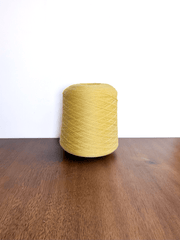
A mill-dyed cone carries a colour made for a garment, not a shelf — mixed to a client's exact specification, dyed with industrial precision, and never made again. Here is what that means, and why it matters.
 Most conversations about yarn colour are about hand-dyeing: the small-batch, artisanal, gently variegated skeins of the indie world. They are lovely, and they are only half the story. The other half — quieter, and less often explained — is mill-dyed colour: yarn coloured inside a textile factory, to a professional standard, for a specific purpose.
These are the colours behind finished garments rather than craft-store shelves, and when a production run ends, what remains becomes a specialty cone. Understanding how that colour is made is the key to understanding why it looks and behaves the way it does.
What mill-dyed actually means
Mill-dyed yarn is coloured inside a textile mill, using industrial dyeing equipment, most often by the method built for cones: package dyeing.
In package dyeing, the yarn is wound onto a perforated cone or tube, and dye liquor is pumped through it under pressure and temperature, forcing colour evenly through every layer. It is a mature, computer-controlled process — automated dosing, temperature curves, spectrophotometric colour measurement — engineered for one thing above all: consistency. Every cone in a dye lot comes out matched, with a levelness of colour that hand-dyeing does not attempt and cannot easily reach.
This is the same family of process that colours the yarn for commercial knitwear. When you hold a mill-dyed cone, you are holding colour made to the standard of the garment industry, not the craft market.
Hand-dyed colour is made to be beautiful on the skein. Mill-dyed colour is made to be right in the finished cloth — even, consistent, and true across an entire production run.
Why these colours are limited
The scarcity of a specialty cone is not a marketing device. It is a structural fact of how the colour came to exist.
Mill dye lots are made to order, in relatively small industrial quantities, for a particular reason: a fashion house requesting an exact shade for a collection, a seasonal palette, a specific garment programme. The colour is mixed to a specification — often matched to a reference or a Pantone target — and dyed in the quantity that order needs, and no more.
When that dye lot is finished, it is rarely, if ever, reproduced. The collection has shipped; the season has passed; the exact recipe, in that exact quantity, has served its purpose. What remains is finite by definition.
| A specialty cone's colour exists because… |
|---|
| A fashion house specified an exact shade for a collection |
| A seasonal palette was dyed, then retired |
| A production run was adjusted, leaving a remainder |
| The dye lot was completed and never re-run |
This is the same logic that governs surplus yarn in general — colour included. Some shades, quite simply, do not come back. Our guide to why buy surplus and mill-end yarn follows that thread further.
Why mill-dyed colours feel so considered
There is a particular quality to mill-dyed colour that many makers notice before they can name it: it tends to feel calm, resolved, quietly sophisticated. That is not an accident of taste. It is a consequence of purpose.
These colours were designed to live in garments, not to compete for attention on a shelf. A shade mixed for a designer's collection has to work on the body, beside other colours, across a whole line — so it is chosen with restraint, depth, and wearability in mind, rather than the immediate shelf-appeal that sells a single skein. The result is a palette that reads as intentional: colours with context, developed by people whose job is colour.
A mill-dyed colour carries the judgment of a professional palette. It was never meant to shout. It was meant to be worn — which is exactly why it wears so well.
Mill-dyed and hand-dyed: two different crafts
This is not a case of one being better. Mill-dyed and hand-dyed colour are different disciplines, made for different things, and a maker is well served by understanding both.
| Mill-dyed | Hand-dyed | |
|---|---|---|
| Made for | Garment production | The individual skein |
| Colour character | Even, precise, restrained | Variegated, expressive, unique |
| Consistency | High — matched across a lot | Intentionally variable |
| Best for | Clean colour fields, tailored pieces | Painterly, one-of-a-kind effects |
Hand-dyeing offers the artist's hand — variation, surprise, the mark of a person. Mill-dyeing offers the professional's discipline — evenness, depth, and a colour you can trust across a whole garment. For a tailored coat in a single resolved shade, mill-dyed is often the truer choice; for a shawl that shifts and pools, hand-dyed. Neither replaces the other.
Working with a mill-dyed cone
A few practical notes for getting the best from these colours.
- Trust the consistency. A single mill-dyed cone holds enough evenly matched colour for a whole garment, with no dye-lot joins to manage — one of the quiet advantages of buying colour by the cone.
- Buy enough at once. Because the lot will not return, a project's worth bought together is a project's worth secured. There is no reordering the same shade later.
- Let the fiber finish first. As with any cone, colour sits on a yarn that may still be unfinished — wash a swatch to see the shade in its final, bloomed state. Our guide to blooming explains why.
- Read the description. A well-run source will tell you what is known about a specialty cone's colour and origin, and flag what isn't. That honesty is part of what you're choosing — see how to choose a cone-yarn source.
Limited, and meaningful
A mill-dyed specialty cone is a small piece of the garment industry's colour work, arrived in a maker's hands by way of surplus. Its shade was mixed by professionals, for a purpose, to a standard — and then the lot closed, making it quietly finite.
That is what "limited yet meaningful" really describes: not a scarcity invented to sell, but a colour with genuine context and a professional's judgment behind it, available for a while and then gone. For the maker who values colour that was made to be worn, it is one of the most rewarding things a cone can offer.
Frequently asked questions
What is mill-dyed yarn?
Mill-dyed yarn is coloured inside a textile factory using industrial equipment — most often package dyeing, where yarn wound on a perforated cone has dye forced through it under pressure for even, consistent colour. It is dyed to a professional garment-industry standard, typically for a specific client, collection, or order.
How is mill-dyed different from hand-dyed yarn?
Mill-dyed colour is even, precise, and restrained, made for garment production and matched consistently across a dye lot. Hand-dyed colour is variegated, expressive, and intentionally variable, made to be beautiful on the individual skein. Neither is better; they are different crafts for different purposes.
Why are mill-dyed specialty cones limited?
Because mill dye lots are made to order in relatively small quantities — for a fashion house's collection, a seasonal palette, or a specific run — and rarely reproduced once complete. When the lot is finished, that exact shade in that exact quantity is gone. The scarcity is structural, not a sales tactic.
Why do mill-dyed colours look so refined?
Because they were designed to live in garments, not to stand out on a shelf. A shade mixed for a designer's collection has to work on the body and across a whole line, so it is chosen for restraint, depth, and wearability rather than immediate shelf-appeal. That professional judgment is why the palette feels so considered.
What is package dyeing?
Package dyeing is the standard industrial method for colouring cone yarn. The yarn is wound onto a perforated cone or tube, and dye liquor is pumped through it under pressure and temperature, forcing colour evenly through every layer. It is computer-controlled for high consistency, giving matched colour across an entire dye lot.
Can I reorder a mill-dyed colour I love?
Usually not. Specialty cones come from completed dye lots that are rarely re-run, so a shade that sells out is generally gone for good. This is why it's wise to buy enough of a mill-dyed colour for a whole project at once, rather than counting on restocking the same lot later.
Some yarns don't come back.
That Yarn drops new mill-end on the 1st and 15th.
Have a question about a specific cone? Write to us at hello@thatyarn.com — we answer every email.