That Yarn · Journal
The Warmest Fibers for Winter — and Why They're Warm
No fiber makes heat. The warmest ones simply trap more of your own — and understanding how they do it turns "which yarn is warmest" from a guess into a decision.
 As the year turns cold, one question comes up more than any other: which fiber is the warmest? It is usually answered with a list, one fiber ranked above the next, as though warmth were a single fixed number. It isn't. Warmth in a fiber is a mechanism, and once you understand the mechanism, you can choose warmth deliberately — for the garment, the weight, and the wearer you have in mind.
So this is less a ranking than an explanation. Here is how fiber keeps you warm, which fibers do it best, and why.
The one thing that makes fiber warm
Start with a fact that reframes everything: no fiber generates heat. Wool, cashmere, yak — none of them is warm in itself. What they do is trap the heat your own body produces and hold it close to your skin. A warm fiber is simply a very good trap for your own warmth.
And the thing they trap it with is still air. Trapped, motionless air is the single most effective insulator in nature — better than the fiber itself. So the warmth of any fiber comes down to one question: how much still air can it hold near your body? Everything else — fineness, crimp, hollowness, loft — is just a different way of trapping more air.
Still air trapped near your skin holds it in
A "warm fiber" is one that traps a lot of still air
→ Warmth = air-trapping structure, not the fiber material alone
The warmest fiber is not the one that feels thickest. It is the one that traps the most still air for its weight — which is why the finest, lightest luxury fibers are so often the warmest of all.
The four ways a fiber traps air
Different fibers trap air by different structural tricks, and the great winter fibers usually combine several. Knowing them lets you read warmth from a fiber's description.
Crimp — the wave in the fiber
Many fibers are naturally wavy, or crimped. That waviness holds fibers apart from one another, opening up spaces between them where air sits still. Crimp is wool's great gift: it is what gives wool its springy loft and much of its warmth, and it is why a lofty woollen-spun yarn insulates so well.
Fineness — more fibers, more pockets
The finer each fiber is, the more of them fit into the same weight of yarn — and more fibers means more tiny air pockets between them. This is a large part of why fine fibers like cashmere are so warm despite being so light: thousands of ultrafine fibers create countless microscopic pockets of trapped air without any bulk at all.
Hollowness — air inside the fiber
Some fibers trap air not only between strands but within them, thanks to a hollow or semi-hollow core. That internal air adds insulation without adding weight. Mohair's semi-hollow structure is a classic example, and part of why it is so warm for how light it feels.
Loft — the air the yarn holds
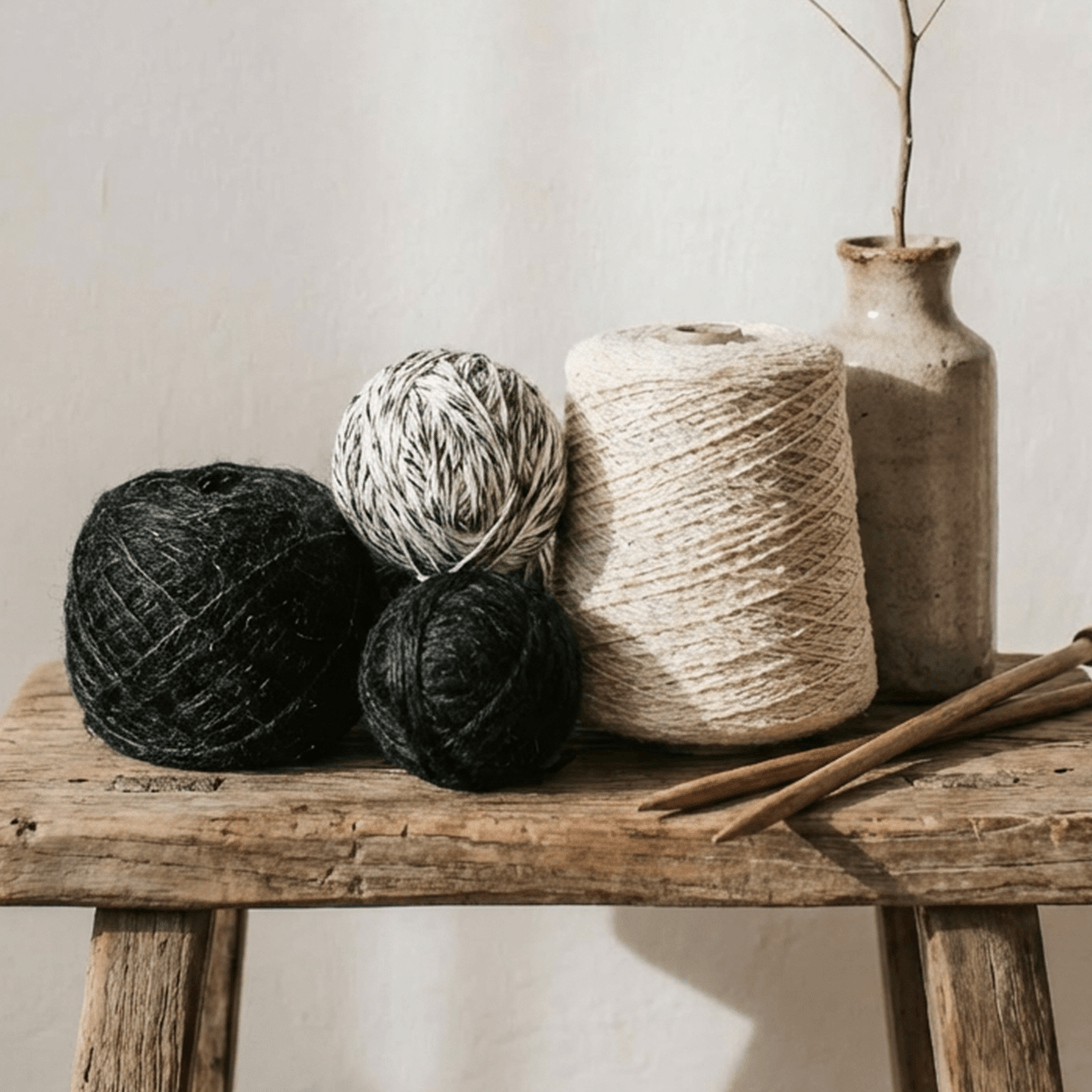
Finally, how a fiber is spun matters as much as the fiber. A lofty, airy, woollen-spun yarn holds far more air than the same fiber spun dense and tight. This is why the same wool can be warm or cool depending on its preparation, and why a bloomed cone yarn — which opens up in the wash — often ends up warmer than it felt on the cone. Our guide to blooming explains that opening-up.
The warm fibers, and why each one works
With the mechanism clear, the warmest fibers sort themselves not by a single ranking but by how — and how well — they trap air. A note on the numbers first: you will see claims that one fiber is "eight times warmer" than another, and these should be taken loosely. They come mostly from marketing, vary wildly between sources, and depend heavily on how a yarn is spun and knitted. The mechanisms below are sound; treat the exact multipliers as rough impressions, not measurements.
Yak
One of the warmest fibers for its weight. Yak down is fine (roughly 15 to 19 microns, cashmere territory) with a natural crimp that traps air densely, and it insulates out of all proportion to its lightness — independent testing has put it around a third or more warmer than merino by weight. It comes from animals that survive the brutal cold of the Tibetan Plateau, which is precisely why it evolved to insulate so well. It is the fiber at the heart of our own Plateau line, and our guide to yak fiber follows it in full.
Cashmere
The benchmark for warmth-without-weight. Cashmere's extraordinary fineness (around 14 to 19 microns) packs countless air pockets into a feather-light yarn, and its natural loft holds warmth close. It is warm, soft, and light all at once — the reason it has been coveted for cold weather for centuries.
Camel
An underrated winter fiber. Bactrian camel down (roughly 17 to 22 microns) is warm, light, and lofty, gathered from animals that endure the temperature extremes of the Central Asian steppe. Naturally a warm golden-brown, quietly luxurious, and less known than cashmere — which often makes it better value.
Mohair
Warm out of all proportion to its weight, thanks to its semi-hollow structure. Mohair gives the warmth of a much heavier wool at a fraction of the heft, along with its signature airy halo. Kid mohair is the finest and softest. We cover it, and its quieter alternatives, in our guide to brushed yarns beyond mohair.
Wool (and fine merino)
The classic, and still one of the best — with a trick the others lack. Wool's crimp makes it wonderfully lofty and warm, and fine merino delivers that warmth softly enough for next-to-skin wear. Wool's unique advantage: it keeps insulating even when damp, where many fibers fail — which makes it the most practical warmth for real winter weather.
| Fiber | How it traps air | Its winter signature |
|---|---|---|
| Yak | Fine + crimped | Exceptional warmth for weight; matte, quiet |
| Cashmere | Ultrafine + lofty | Warm, soft, feather-light |
| Camel | Fine + lofty | Warm, golden, understated |
| Mohair | Semi-hollow core | Warm and very light; airy halo |
| Wool / merino | Crimp + loft | Warm even when damp; practical |
Warmth is not the whole story
Before you simply reach for the warmest fiber, a word of balance — because the warmest choice is not always the best one. A garment worn against the skin needs softness as much as warmth, which favours fine fibers. A hard-wearing outer layer needs durability, which favours wool over more delicate down. And breathability matters: the most comfortable winter fibers regulate temperature rather than simply trapping heat, wicking moisture so you stay warm without overheating. Natural fibers do this far better than synthetics, which can trap sweat along with warmth.
This is why so many of the finest winter yarns are blends — a little yak or cashmere for warmth, merino for elasticity and resilience, each fiber covering another's weakness. Our guide to luxury yarn fibers maps how these fibers combine.
The warmest fiber and the best fiber are not always the same. The right winter yarn balances warmth with softness, durability, and breathability — for the garment and the wearer you have in mind.
Choosing a warm yarn well
Putting it together, a few practical guides for choosing warmth.
- For maximum warmth with no bulk: reach for fine, lofty down — yak or cashmere. They give the most warmth for the least weight.
- For next-to-skin softness and warmth: fine grades matter most — superfine merino, fine cashmere, kid mohair, baby camel. Remember that softness depends on consistency, not just average fineness, as our guide to micron and comfort explains.
- For practical, hard-wearing warmth: wool and fine merino, which insulate even when damp and stand up to real use.
- Let the yarn bloom. With cone and mill-end yarn especially, warmth often increases after washing as the fiber opens into its full loft. Wash a swatch before you judge how warm the finished fabric will be.
The short version
No fiber makes heat; the warmest ones simply trap the most still air near your skin, whether through crimp, fineness, a hollow core, or lofty spinning. That is why the lightest luxury fibers — yak, cashmere, camel, mohair — are so often the warmest, and why fine merino remains the most practical warmth of all, insulating even when damp. Choose warmth by the mechanism, balance it against softness, durability, and breathability, and let the yarn bloom before you judge it. Do that, and you can knit or weave for real winter warmth on purpose — not by luck.
Frequently asked questions
What is the warmest natural fiber for knitting?
For warmth relative to weight, fine animal down like yak and cashmere leads — both trap enormous amounts of still air in a feather-light yarn. Yak is often cited as around a third or more warmer than merino by weight. But "warmest" depends on how a yarn is spun and used; a lofty woollen-spun wool can out-insulate a densely spun luxury fiber. Warmth comes from trapped air, not the fiber name alone.
Why is cashmere so warm despite being so light?
Because warmth comes from trapped air, not fiber weight. Cashmere is extraordinarily fine, so thousands of fibers pack into a light yarn, creating countless microscopic air pockets, and its natural loft holds warm air close to the skin. The result is a lot of insulation with almost no bulk — high warmth for very little weight.
Is yak yarn really warmer than wool?
By weight, generally yes. Yak down is fine and naturally crimped, trapping air densely, and independent testing has put it around a third or more warmer than merino for the same weight. It evolved on the Tibetan Plateau to insulate against extreme cold. As always, spinning and knitting affect the finished warmth, but yak's warmth-to-weight ratio is genuinely exceptional.
Is one fiber really "eight times warmer" than another?
Treat such figures loosely. Claims like "eight times warmer" come mostly from marketing, vary widely between sources, and depend heavily on how the yarn is spun and knitted. The underlying mechanisms — fineness, crimp, hollowness, and loft trapping still air — are real, but the exact multipliers are rough impressions rather than reliable measurements.
Does how a yarn is spun affect its warmth?
Very much. A lofty, airy, woollen-spun yarn traps far more air — and is warmer — than the same fiber spun dense and tight. This is also why cone and mill-end yarns often grow warmer after washing, as the fiber blooms and opens into its full loft. The same fiber can make a warm yarn or a cool one depending on its preparation.
Is the warmest fiber always the best choice?
Not necessarily. Next-to-skin garments need softness, outer layers need durability, and comfort needs breathability — the ability to regulate temperature and wick moisture, not just trap heat. This is why many of the finest winter yarns are blends, pairing a warm fiber like yak or cashmere with resilient merino. The best winter yarn balances warmth with the garment's other needs.
Some yarns don't come back.
That Yarn drops new mill-end on the 1st and 15th.
Have a question about a specific cone? Write to us at hello@thatyarn.com — we answer every email.