That Yarn · Journal
What Is Chainette Yarn? The Knitted-Tube Construction Explained
Most yarn is twisted. Chainette yarn is knitted — a tiny hollow tube that makes heavy fibers light, stiff fibers stretchy, and luxury fibers affordable. Once you understand how it's built, its quiet magic makes sense.
 Look closely at a strand of chainette yarn and you will notice something odd: it is not twisted like ordinary yarn. It looks like a minuscule knitted cord, a tiny tube, almost a miniature i-cord. That is exactly what it is — and that single difference in construction changes everything about how the yarn behaves. Chainette is one of the quiet revolutions in modern yarn, and it turns up constantly in cone and mill-end yarn, so it is worth understanding.
Here is what chainette yarn is, how it is made, why it behaves so differently from ordinary yarn, and how to work with it.
What chainette yarn actually is
Most yarn is made by twisting fibers together — singles twisted, then plied. Chainette is made a completely different way. A fine strand of yarn is machine-knitted into a narrow tube, exactly the way you would knit an i-cord, producing a hollow, chained cord rather than a twisted one. The name comes from the French chaînette, meaning "little chain," which is just what the knitted structure looks like up close.
So when you knit or weave with chainette, you are working with something that has, in a sense, already been knitted once. That hollow, knitted-tube structure is the key to all of its unusual qualities.
Ordinary yarn is twisted. Chainette yarn is knitted into a tiny hollow tube. That one structural difference is where all its lightness, stretch, and quiet cleverness comes from.
Why the hollow tube changes everything
The remarkable thing about chainette is that it lends a fiber qualities the fiber itself may not have. The construction, not just the material, shapes how the yarn behaves.
It makes yarn light
Because a chainette strand is a hollow tube, it is full of air rather than solid fiber. This makes the yarn very light for its thickness — even when the fiber itself is heavy — and gives more yardage per gram, which means more yarn for the weight, and fewer ends to join.
It makes stiff fibers stretchy
The knitted structure has built-in elasticity, just as any knitted fabric stretches. So a chainette yarn springs and recovers even when made from a fiber that has no natural stretch at all. This is the quality that transforms difficult fibers, as we will see.
It traps air for loft and warmth
The hollow core holds air inside the yarn, giving it loft and a light warmth, and helping knitted stitches sit plump and well-defined. Chainette often has beautiful stitch definition for this reason.
It resists pilling
The knitted chains lock the fibers in place, so fiber ends are less free to work loose and pill. Chainette yarns tend to stay looking smooth longer than their twisted-and-plied counterparts.
Why it's a gift for cotton, linen, and other plant fibers
Here is where chainette earns its devotion. Plant fibers — cotton, linen, ramie — are wonderful in many ways, but they share two awkward traits: they have little or no elasticity, and they can be heavy, drooping and growing out of shape over time. Anyone who has knitted with cotton knows the fatigue of an inelastic yarn, and the disappointment of a garment that sags.
Chainette solves both at once. Knitted into a hollow tube, an inelastic plant fiber gains the springiness of the knitted structure, so it is far easier on the hands and holds its shape once made up. And the hollow construction makes a heavy fiber light, so a cotton garment that would have been dense and drooping becomes airy and stable instead. It is often described, only half in jest, as "cotton that knits like wool." For plant fibers, chainette is close to magical — which is why it is so common in summer yarns. Our guides to linen yarn and its cool, structured character are a natural companion here.
For cotton and linen, chainette is transformative: it gives an inelastic, heavy fiber the spring and lightness it never had, turning a difficult yarn into a joy to knit and a garment that holds its shape.
Why luxury fibers use it too
Chainette is not only for plant fibers. You will often find cashmere, merino, and other fine fibers in chainette construction, for a different but equally clever reason.
Because a chainette tube is hollow, it uses less fiber to make the same length of yarn. For an expensive fiber, that has a happy consequence: the cost per yard falls. A cashmere chainette can offer the softness and warmth of cashmere at a gentler price than a solid, plied cashmere of the same thickness — luxury made a little more affordable by construction alone. The knitted structure also locks in the short, fine fibers of a luxury material, reducing pilling. If you are looking for luxury fiber at a kinder price, chainette is often where to find it. Our guide to luxury yarn fibers maps the fibers themselves.
| Chainette gives you | Why it matters |
|---|---|
| Lightness | Airy garments, even from heavy fibers; more yardage per gram |
| Elasticity | Spring and shape retention, even from inelastic fibers |
| Loft & warmth | Trapped air; plump, well-defined stitches |
| Less pilling | Knitted chains lock fibers in place |
| Lower cost per yard | Hollow tube uses less fiber — luxury made affordable |
How chainette compares to other constructions
It helps to place chainette beside the other main ways a yarn can be built, because construction — not just fiber — shapes how a yarn behaves.
| Construction | How it's made | Character |
|---|---|---|
| Plied | Singles twisted, then twisted together | The classic; strong, versatile, defined |
| Chainette | A fine strand knitted into a hollow tube | Light, elastic, lofty, low-pilling |
| Tube (blown) | Soft fiber blown into a fine knitted sleeve | Very light and lofty, soft halo |
| Single | One strand, unplied | Soft, can be less durable, may bias |
The lesson that runs through all of these is one we return to often: a yarn's behaviour is decided as much by how it is built as by what it is made of. Understanding construction is part of reading a yarn well, which our guide to judging a yarn covers in full.
How to work with chainette yarn
Chainette is a pleasure to work with, but its structure asks for a few small adjustments.
- Try a slightly larger needle. Because chainette has more give than a plied yarn, a slightly larger needle lets the yarn stretch and the fabric breathe, giving the best drape.
- Mind the elasticity in fit. The extra spring is a gift, but for structured garments, seams or firm edgings help hold a shape — much as they would in any stretchy knit.
- Don't split the tube. Because chainette is a knitted cord, a sharp needle can occasionally split into it. A smoother, blunter tip helps you glide past the chains.
- Always swatch and wash. As with any yarn — and cone yarn especially — a washed swatch tells you the true finished gauge and hand. Chainette can shift and bloom in the wash like any yarn; see our guide to blooming.
Chainette on the cone
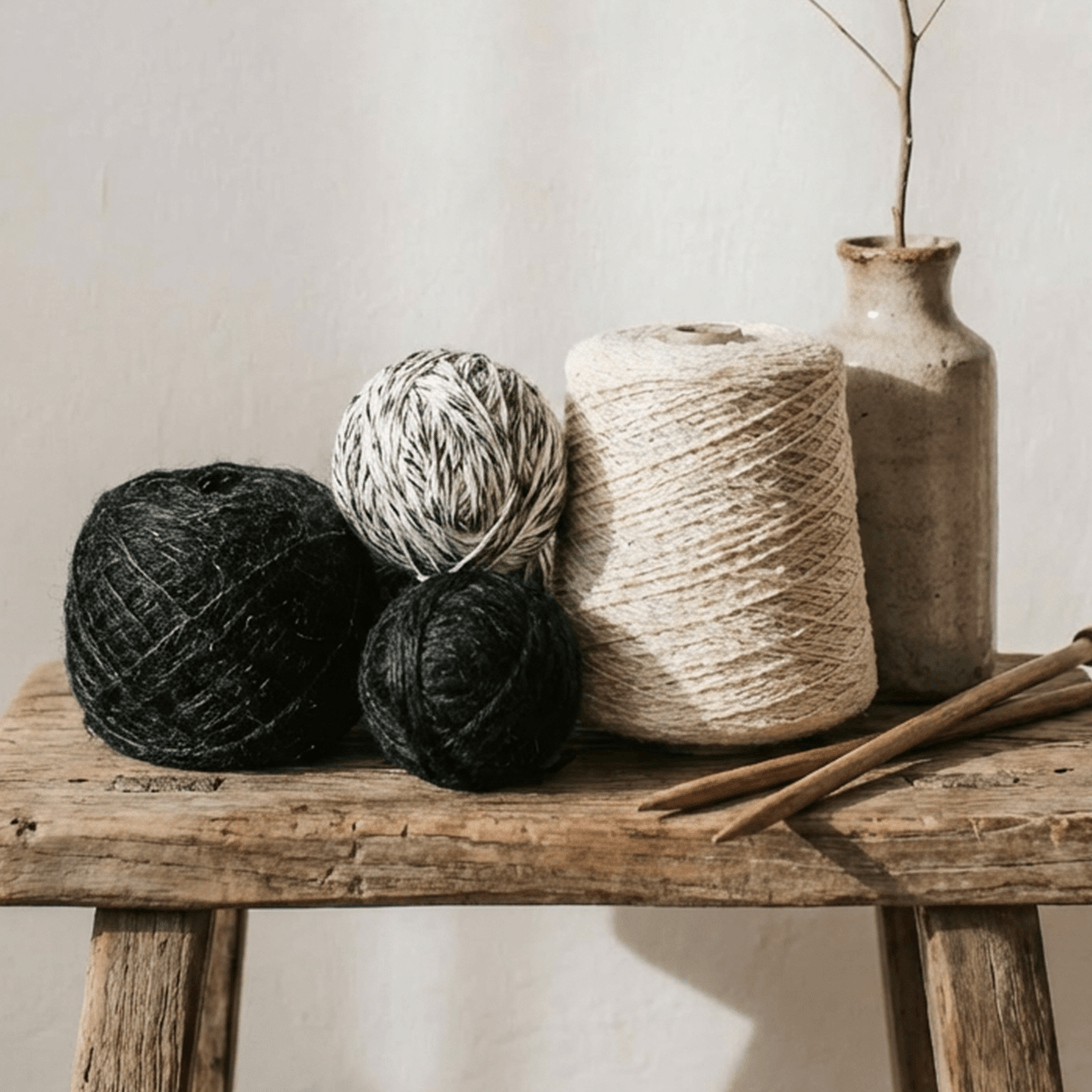
Chainette turns up often in industrial and mill-end cone yarn, across both plant fibers and luxury blends — which makes a shelf of surplus cones a good place to meet it. A chainette cotton or linen cone gives you summer yarn that is light and easy to knit; a chainette cashmere or merino cone offers luxury softness at a kinder price. As always with mill-end, the cone may look and feel different from the finished, washed fabric, so swatch before you judge. Our guide to buying surplus and mill-end yarn covers the wider case.
The short version
Chainette yarn is a fine strand knitted into a tiny hollow tube, rather than twisted like ordinary yarn — the name means "little chain." That knitted-tube construction makes the yarn light, elastic, lofty, and slow to pill, lending fibers qualities they may not have on their own. It is transformative for heavy, inelastic plant fibers like cotton and linen, giving them spring and lightness, and it makes luxury fibers like cashmere more affordable, since the hollow tube uses less fiber per yard. Work it on a slightly larger needle, swatch and wash before you judge, and remember the wider truth it illustrates: how a yarn is built matters as much as what it's made of.
Frequently asked questions
What is chainette yarn?
Chainette yarn is a fine strand of yarn machine-knitted into a narrow hollow tube, rather than twisted and plied like ordinary yarn — essentially a tiny knitted cord, like a miniature i-cord. The name comes from the French for "little chain." This hollow, knitted structure makes the yarn light, elastic, and lofty, giving it qualities the fiber alone may not have.
What are the benefits of chainette yarn?
Its hollow knitted tube makes it very light for its thickness, with more yardage per gram; it adds natural elasticity and shape retention even to inelastic fibers; it traps air for loft, warmth, and crisp stitch definition; and its locked-in chains resist pilling. For expensive fibers, it also lowers cost per yard, since the hollow tube uses less fiber.
Why is chainette yarn good for cotton and plant fibers?
Cotton, linen, and other plant fibers have little elasticity and can be heavy, so they tire the hands to knit and tend to droop out of shape. Chainette construction gives them the spring of a knitted structure and the lightness of a hollow tube, so they hold their shape and knit far more easily. It's often called "cotton that knits like wool," which is why chainette is so popular for summer yarns.
Why is chainette used for cashmere and luxury fibers?
Because a chainette tube is hollow, it uses less fiber to make the same length of yarn, so the cost per yard is lower. This lets a cashmere or merino chainette offer luxury softness and warmth at a gentler price than a solid plied version of the same thickness. The knitted chains also lock in the fine fibers, reducing pilling.
How do you knit with chainette yarn?
Chainette is easy and pleasant to knit, with a few small adjustments. Use a slightly larger needle to let its natural stretch breathe, use a smoother, blunter tip so the needle doesn't split the knitted cord, and lean on seams or firm edgings if you need a structured garment to hold its shape. As always, swatch and wash before committing, since chainette shifts and blooms in the wash like any yarn.
How is chainette different from plied yarn?
Plied yarn is made by twisting fibers into singles and then twisting those together — the classic, strong, versatile construction. Chainette is knitted into a hollow tube instead of twisted, which makes it lighter, more elastic, loftier, and less prone to pilling. It's a different way of building a yarn, and it changes how the yarn behaves regardless of the fiber inside.
Some yarns don't come back.
That Yarn drops new mill-end on the 1st and 15th.
Have a question about a specific cone? Write to us at hello@thatyarn.com — we answer every email.